
You swing your legs out of bed, and the first few steps feel borrowed from someone twenty years older. Knees lock. Hips ache. Your lower back protests until you have moved around the kitchen for a while. Then, oddly, the stiffness loosens. Sit still for an hour, and it comes right back.
That pattern of pain that worsens with rest and eases with motion has a name in classical homeopathy, and it points to one specific remedy. Rhus Toxicodendron, often shortened to Rhus Tox, is the homeopathic remedy most closely tied to stiffness that improves once you get moving. It also appears as an active ingredient in Blue Scorpion's FDA NDC-listed formula, a non-opioid, alcohol-free option some people use for temporary relief of pain and inflammation.*
*These statements are based only on traditional homeopathic theory from the 1700s, not accepted by most modern medical experts. There is no scientific evidence that this product works.
In this guide you'll discover what Rhus Tox is made from, how the homeopathic preparation differs from the raw plant, the symptom picture practitioners look for, common potencies like 30C and 200C, and when to see a doctor instead. No filler. Just what you need to know.
The Symptom Pattern Behind Rhus Tox
Homeopathy does not pick remedies by diagnosis alone. It matches the full pattern of how symptoms behave, and Rhus Toxicodendron has one of the most recognizable patterns in the materia medica.
Stiffness That Improves After the First Few Movements
The signature is simple. Initial movement hurts, continued motion helps. Someone who fits the Rhus-t picture feels worse after sitting through a movie or a long drive, and better after walking around the block.
Joint stiffness and muscle stiffness dominate the picture more than sharp pain. There is often soreness in the lower back, knees, or shoulders that feels rusty rather than stabbing. Musculoskeletal pain that loosens with gentle movement is the core keynote.
Restlessness, Position Changes, and Activity
Because staying still makes things worse, restlessness follows naturally. People described in classical texts shift constantly in bed, unable to find a comfortable spot, then get up to stretch at 3 a.m.
That physical restlessness often comes with impatience and low-grade anxiety. Vivid dreams of physical activity, like working or running, show up in older case notes. The mental picture mirrors the body: unable to settle.
Weather, Warmth, and Other Modalities
Modalities are the conditions that make symptoms better or worse. For Rhus Tox, they are unusually consistent:
Worse: cold damp weather, rain, rest, night, getting chilled after sweating
Better: warmth, warm applications or hot applications, continued movement, dry weather, gentle massage
Also noted: sensitivity to touch over sore areas, and a desire for cold drinks during fever
If your own pattern runs the opposite way, easing with stillness and worsening with motion, a different remedy likely fits better. That difference starts with where this one comes from.
Plant Origin, Preparation, and Evidence Limits
Rhus Toxicodendron is made from poison ivy. That fact stops most people mid-scroll, so it deserves a clear explanation.
Poison Ivy, Poison Oak, and the Anacardiaceae Family
The source plant is Toxicodendron radicans, North American poison ivy, part of the Anacardiaceae family alongside poison oak and sumac. In its crude form, the plant causes the blistering rash most of us learned to avoid on hikes; Mayo Clinic's overview of poison ivy symptoms and causes covers what that reaction actually looks like and how it's treated.
Homeopathy works partly on the principle that a substance producing certain symptoms in a healthy person may be used in tiny doses for a similar symptom picture. Poison ivy reactions include itching, redness, and stiff aching, which mirrors the Rhus-t profile.
From Toxicodendron Radicans to a Homeopathic Preparation
Fresh leaves and shoots are harvested before flowering, then put through serial dilution and succussion, a repeated shaking step. The result is a homeopathic medicine, not a plant extract or an herbal tincture.
By the time you reach potencies like 6X, 30C, or 200C, the preparation is extremely dilute. That is why homeopathic Rhus Tox is not handled like raw poison ivy and does not carry the same contact risk.
Why Medical Evaluation Still Matters
Research on homeopathy for arthritis and similar chronic conditions remains limited and mixed. Reviews of the available data have not produced strong proof of effect, and that should be stated plainly.
Traditional use is not the same as clinical proof. A homeopathic practitioner performs an individualized assessment, but any persistent pain still needs a medical workup first. With that framing set, the traditional uses make more sense.
Traditional Profiles for Muscles, Joints, and Connective Tissue
Classical texts place Rhus Toxicodendron near the top of the list for fibrous tissues: tendons, ligaments, joint capsules, and connective tissue.
Sprains, Strains, and Ligament Injuries
Rhus Tox uses in homeopathy have long centered on overexertion. Think lifting something awkward, stretching overhead to reach a shelf, or a weekend of yard work that leaves everything tight.
The traditional profile covers sprains, strains, tendon inflammation, and soreness after overuse. The classic description is a strain that stiffens overnight and loosens once you start moving the next day. Blue Scorpion's muscle soreness recovery guide covers the at-home side of this pattern in more depth.
Rheumatic Complaints, Arthritis, and Sciatica
Older materia medica entries associate the remedy with rheumatic pain, arthritis-type stiffness, fibromyalgia-style aching, and sciatica. Cold damp weather is repeatedly named as an aggravating factor.
These are traditional remedy profiles, not proven treatments. No homeopathic remedy should be presented as a cure for arthritis, fibromyalgia, or nerve pain of any kind. If ongoing joint stiffness is what brought you here, our joint pain relief guide covers general, non-product-specific approaches to daily mobility.
When Persistent Pain Needs Clinical Assessment
Joint swelling that keeps growing, redness with heat, fever alongside joint pain, or numbness spreading down a limb all call for a doctor. So does pain that wakes you nightly for weeks.
Self-selecting a homeopathic remedy is reasonable for everyday stiffness. It is not reasonable as a substitute for diagnosing what is actually driving the inflammation. The same caution applies to the skin symptoms this remedy is known for.
Traditional Skin and Flu-Like Symptom Profiles
Beyond joints, Rhus-t shows up in classical texts for itchy, blistering skin and for aching flu-type illness. Both trace back to the poison ivy source picture.
Itchy Blisters, Rashes, and Contact Reactions
The skin profile is specific: intense itching, redness, and small fluid-filled vesicular eruptions that burn after scratching. Warm applications often feel better to the person; cold air worse.
Contact reactions from plants sit at the center of this traditional indication. Any rash that spreads quickly, oozes, or comes with fever needs medical care, not home remedies.
Eczema, Hives, and Herpes-Type Eruptions
Historical entries also list eczema, dermatitis, urticaria, and herpes-type eruptions such as shingles and fever blisters around the mouth. The common thread is itching plus vesicular eruptions rather than dry scaling.
Shingles in particular is a condition that needs prompt medical attention. Mentioning it here reflects the traditional materia medica, not a recommendation to self-treat.
Fever, Chills, and Respiratory Symptoms
Rhus Tox appears in old flu and influenza references where the body aches everywhere and the person cannot lie still. Chills, sore throat, sneezing, headache, dizziness, and dry cough at night fill out the picture.
Restlessness during fever, with constant repositioning, is the marker practitioners look for. Knowing the symptom picture is only half the decision, though. The other half is dose.
Potencies, Remedy Comparisons, and Safe Next Steps
Potency labels confuse most first-time buyers. The numbers describe dilution steps, not strength in the way milligrams do.
What Rhus Tox 30 and Rhus Tox 200 Mean
Rhus Tox 30 means 30C, thirty rounds of dilution and succussion. Rhus Tox 200 means 200C, a higher potency used less often and typically spaced further apart.
Lower potencies such as 6C or 6X are common in combination formulas and everyday use. Practitioners generally reserve 200C for acute situations and guided care.
Rhus Tox Compared With Bryonia and Apis
Bryonia is the near-opposite: pain that worsens with any motion and eases with firm pressure and stillness. If lying perfectly still is your relief, Bryonia fits, not Rhus-t.
Apis suits hot, puffy, stinging swelling that feels better from cold. Arsenicum album, Calcarea fluorica, Phytolacca, and Grindelia each carry their own symptom pictures. Matching modalities matters more than matching a diagnosis.
Symptoms That Should Not Be Self-Treated
Chest pain, sudden severe joint swelling, unexplained weight loss, high fever, or loss of bladder control are emergencies. Nothing on a homeopathy shelf belongs in that conversation.
For ordinary stiffness and soreness, the practical question becomes which format fits your routine best.
Where Blue Scorpion Fits Into a Practical Relief Plan
Single-remedy pellets are one option. Multi-ingredient liquid formulas are another, and that is where Rhus Toxicodendron often appears alongside complementary ingredients.
A Non-Opioid, Alcohol-Free Formula for Everyday Use
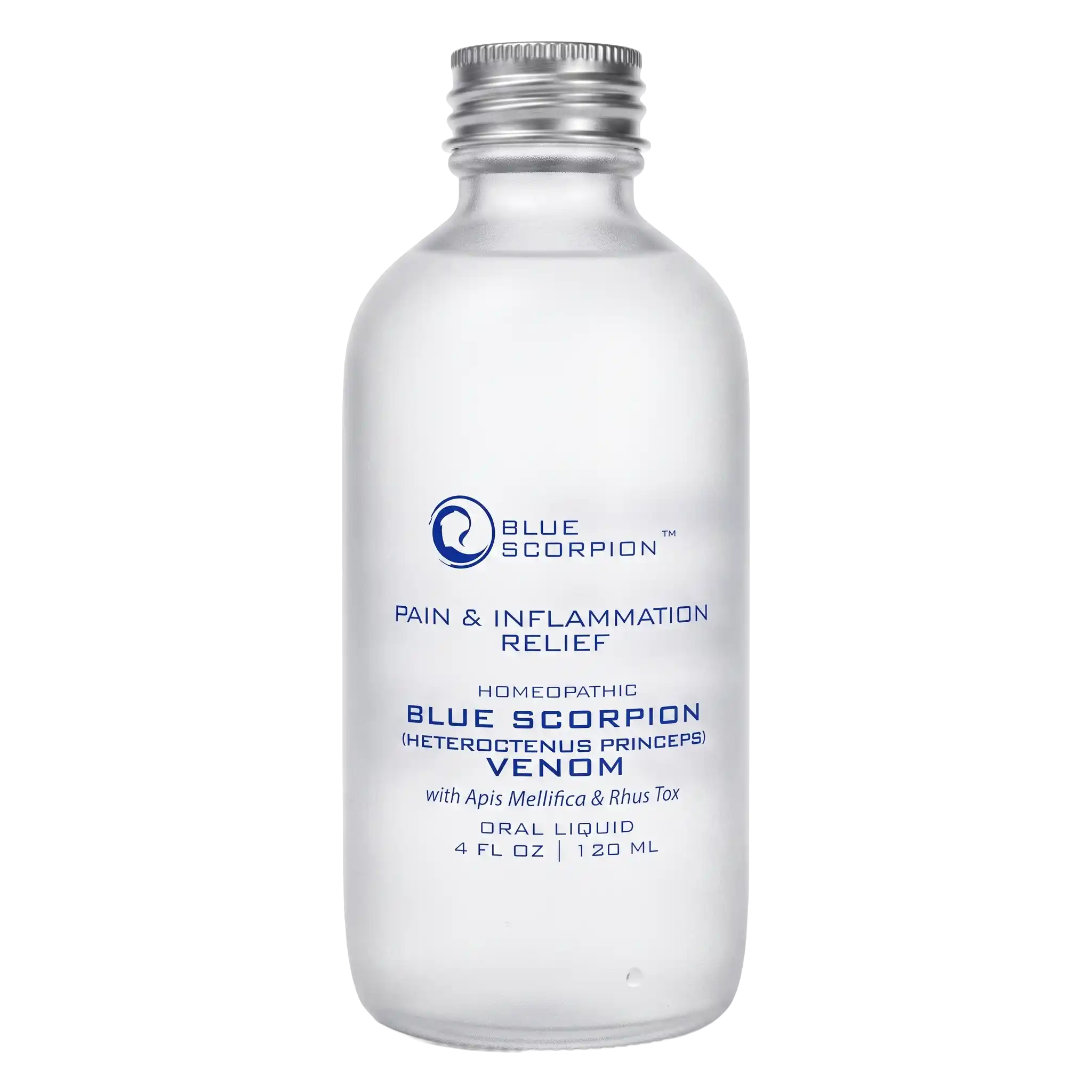
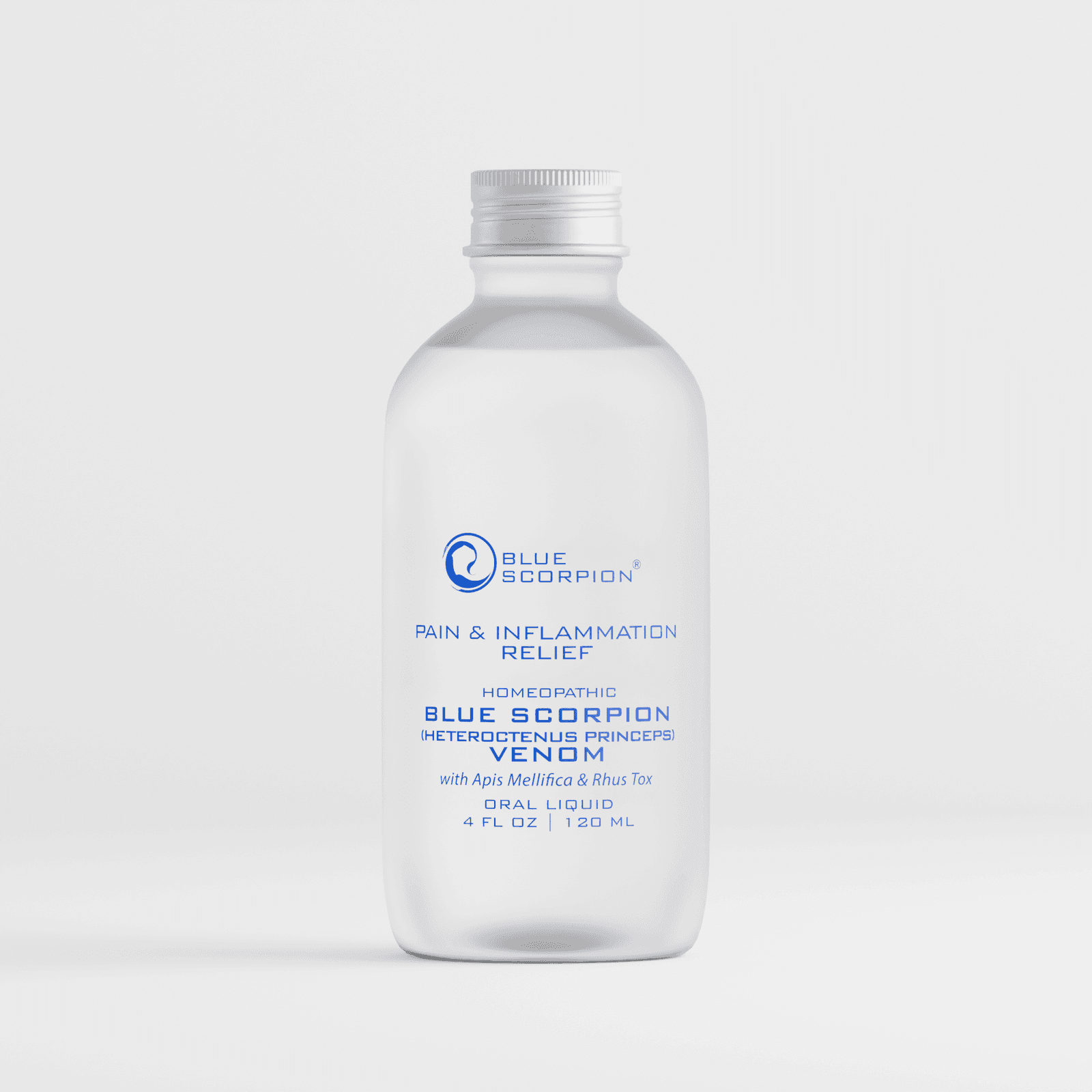
Blue Scorpion Pain and Inflammation Relief combines Heteroctenus Princeps venom 3X, Apis Mellifica 6X, and Rhus Toxicodendron 6X in an alcohol-free liquid, taken orally under the tongue.
Each active ingredient is traditionally indicated for the temporary relief of minor pain and inflammation.* Learn more about how the ingredients are traditionally used individually in this homeopathic pain relief guide.
*These statements are based only on traditional homeopathic theory from the 1700s, not accepted by most modern medical experts. There is no scientific evidence that this product works.
Reading an FDA NDC Listing Accurately
An FDA NDC listing means the product is registered in the National Drug Code directory with its ingredients and labeling on file. It is a transparency and identification signal.
It is not FDA approval. No homeopathic drug is FDA-approved, and that matters when you compare options honestly. For the fuller explanation, see FDA-Listed vs. FDA-Approved: What NDC Listing Means.
Frequently Asked Questions
What Is Rhus Toxicodendron Commonly Used for When Stiffness Feels Worse After Resting?
Traditionally, it is selected for joint stiffness, muscle soreness, and rheumatic-type aching that sets in after sitting or sleeping.* The classic indication is stiffness after inactivity that loosens once you move.
Can Rhus Toxicodendron Help With Joint Pain That Improves With Gentle Movement?
That specific pattern, worse on first motion and better with continued movement, is the main keynote practitioners use to choose it.* Evidence remains limited, so treat it as a traditional symptom match rather than proven therapy.
What Is the Difference Between Rhus Toxicodendron 30C and 200C?
The numbers show how many dilution and succussion steps were performed. 200C is a higher potency usually given less frequently, while 30C and lower potencies like 6X are more common for everyday and combination use.
How Should Rhus Toxicodendron Tablets or Pellets Be Taken?
Follow the label on the product you buy, since directions vary by potency and format. Pellets are typically dissolved under the tongue away from food or strong flavors, and liquid formulas are also taken orally under the tongue.
How Quickly Do People Typically Notice Effects After Taking Rhus Toxicodendron?
Reported experiences vary widely from a same-day change in acute soreness to nothing noticeable at all. Give any routine a consistent trial of a week or two, and stop if symptoms worsen or new ones appear.
What Side Effects or Safety Concerns Should Be Considered Before Using Rhus Toxicodendron?
Homeopathic dilutions are generally well tolerated, but you should speak with a doctor if you are pregnant, nursing, giving it to a child, or taking prescription medication. Stop use and seek care if a rash, swelling, or breathing difficulty develops.
Choosing a Product or Bundle With Clear Expectations
Set expectations before you buy. Track your stiffness on a simple scale, note morning versus evening, and give any routine a fair, consistent trial window.
Match the symptom pattern first, then pick a format
Keep the daily dose consistent rather than sporadic
Keep your doctor informed if you manage a diagnosed condition
Blue Scorpion's FDA NDC-listed formula is traditionally used for temporary relief of minor pain and inflammation.*
*These statements are based only on traditional homeopathic theory from the 1700s, not accepted by most modern medical experts. There is no scientific evidence that this product works.
Bundle and save if you plan to use it daily.
This product is not intended to diagnose, treat, cure, or prevent any disease. Not evaluated by the FDA.