

Joint stiffness that greets you before your feet hit the floor, muscle soreness that lingers two days after a workout, nerve discomfort that flares up at night and disrupts sleep. These are not dramatic emergencies, but they chip away at daily comfort in ways that add up fast. If you have been searching for a non-opioid, non-pharmaceutical option that works with your body rather than around it.
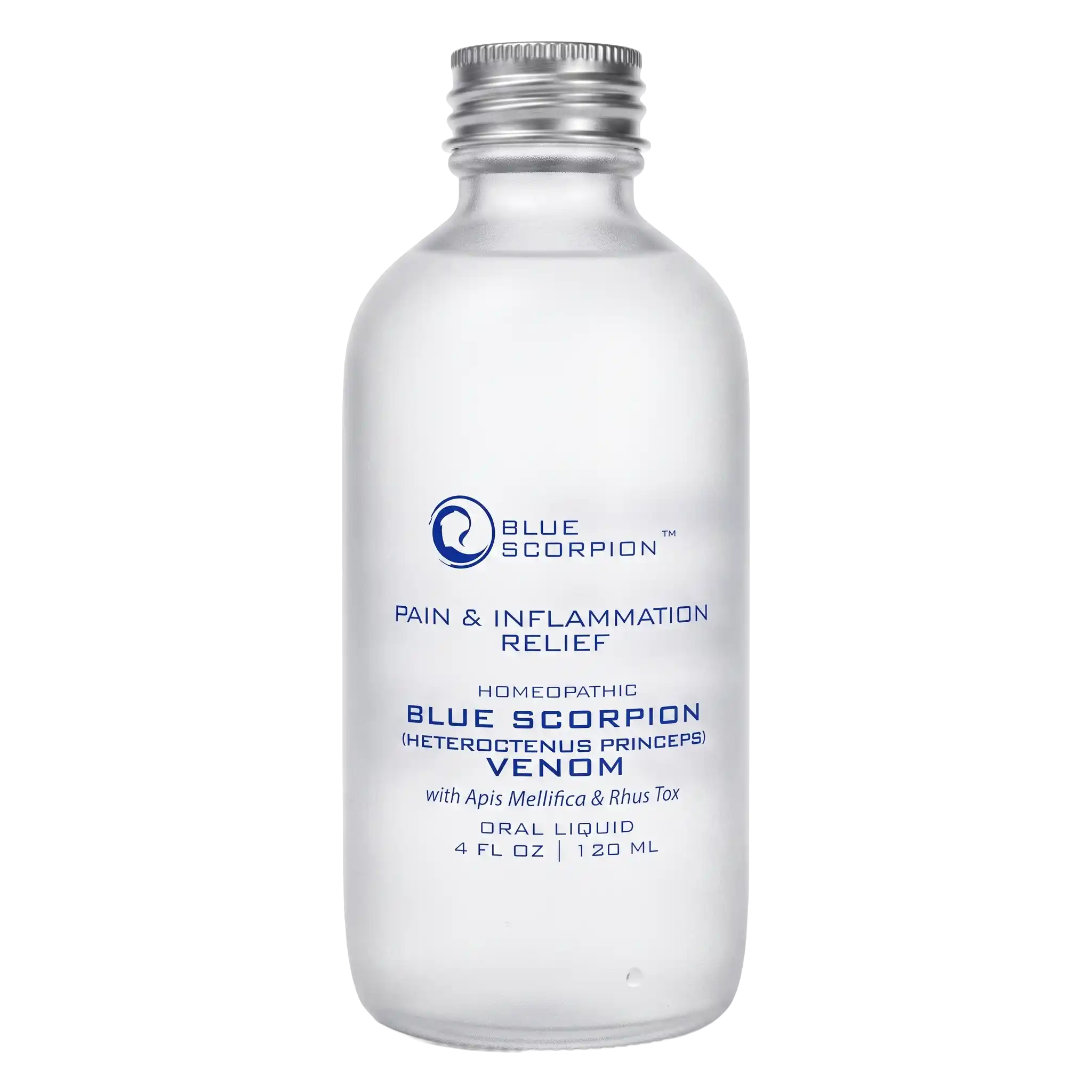
Blue Scorpion Pain and Inflammation Relief is an FDA NDC-listed homeopathic formula based on Heteroctenus princeps. The raw venom is rich in naturally occurring peptides, but the finished product is diluted into a homeopathic form (3X). It is non-opioid and alcohol-free, and it sits within a broader landscape of homeopathic options worth understanding before you choose anything.
Keep reading to learn how homeopathic formulas are structured, what realistic results look like, and how to evaluate a credible product. This guide covers every question a curious, skeptical reader should ask before committing to a homeopathic regimen.
What Everyday Discomfort Can Look Like
Pain is rarely one thing. It shows up in layers, and knowing which layer you are dealing with helps you choose more precisely.
Joint Stiffness and Body Aches
Stiffness and aching in the joints often signal that local tissue is inflamed or overworked. You feel it in the knees after a long day on your feet, in the fingers after hours of repetitive work, or in the hips after sitting too long.
Rhus Toxicodendron is a homeopathic ingredient derived from poison ivy. It has a long history of traditional use for joint discomfort, stiffness, and skin irritation.* The classic indication for this ingredient is discomfort that feels worse with first movement but eases slightly as you keep going.
Body aches tend to be more diffuse. They can follow illness, overexertion, or a disruption in sleep quality. Both patterns, localized stiffness and whole-body aching, can occur together, which is one reason multi-ingredient formulas attract attention.
Muscle Soreness and Post-Activity Tenderness
Muscle soreness after physical activity follows a predictable pattern. Delayed-onset soreness typically peaks around 24 to 48 hours after exertion, when microtears in muscle tissue trigger localized inflammation.
The soreness itself is part of healthy adaptation, but persistent tenderness can limit your ability to train consistently. Athletes and active adults often look for options that support the body's normal inflammatory response without entirely blunting the adaptation signal.*
Apis Mellifica, derived from the honeybee, is traditionally used in homeopathy to relieve swelling, redness, and discomfort.
* Those three markers are also common features of acute post-activity soreness, making it a relevant ingredient to watch for in recovery-focused formulas.
Nerve Discomfort and Irritated Sensations
Nerve-related discomfort has a distinct quality. It may feel like burning, tingling, electric shooting, or a persistent irritation that is hard to localize. It can show up in the lower back, down a limb, or in the hands after repetitive strain.
Heteroctenus Princeps is a homeopathic ingredient derived from Caribbean blue scorpion venom, used in highly diluted form. Certain peptides found in blue scorpion venom have been studied for their interaction with pathways involved in nerve signaling and inflammation.* Understanding the type of discomfort you are managing shapes everything about which formula makes sense, which is the foundation of what homeopathy, as a system, is designed to address.
Understanding the type of discomfort you are managing shapes everything about which formula makes sense, which is the foundation of what homeopathy, as a system, is designed to address.
What Homeopathy Means in Plain English
Homeopathy is a structured system of medicine, not a loose collection of herbal supplements. It has rules, a pharmacopeia, and a regulatory relationship with the FDA.
How Homeopathic Formulas Are Structured
Homeopathic formulas list active ingredients with a potency designation, such as 3X, 6X, or 30C. Each designation tells you how many times the original substance was diluted and activated during preparation. The formulas also include inactive ingredients that carry the active preparation into the body.
Multi-ingredient combination formulas are designed to address several symptom patterns at once. This contrasts with classical single-remedy homeopathy, where one ingredient is matched to one person's specific symptom picture. Both approaches have practitioners and supporters, but combination OTC products are what most people encounter first.
A well-structured formula will name each ingredient precisely, list its potency, and pair that information with an FDA NDC code, indicating it has been registered as a drug product.
Dilution and Potentization Without the Jargon
The 3X designation means the original substance was diluted 1:10 three times and activated between each step. The 6X designation means that process repeated six times. Potentization refers to the activation step, typically a specific form of vigorous agitation, that homeopathic practitioners believe affects how the formula works.
Critics of homeopathy focus on the extreme dilution as evidence that nothing active remains. Supporters point to homeopathy's long tradition of practitioner-observed use and its HPUS-standardized preparation process. The honest answer is that the mechanism is not fully explained by conventional chemistry.
You can verify whether a formula follows HPUS standards (the Homeopathic Pharmacopeia of the United States) and whether it has an FDA NDC listing. Those are structural markers of a product prepared according to established protocols.
Why People Use Systemic Oral Remedies
Topical applications reach the site of application directly, but pain often has roots that are not local. Nerve pathways, immune signaling, and systemic inflammation all involve processes that no cream can reach on its own.
Systemic oral homeopathic formulas are designed to be absorbed sublingually, meaning under the tongue, where absorption into the bloodstream can occur quickly. Holding the formula under the tongue for 15 seconds before swallowing is a standard method of administration for liquid homeopathic products.
This delivery approach is why some people prefer a liquid oral formula for discomfort that travels or varies in location day to day, as opposed to a topical that must be re-applied to each affected area.
Does It Actually Work and Is It Safe
This is the honest question most first-time users carry, and it deserves a direct answer.
What Supporters Mean by Symptom Relief
When homeopathic supporters say a remedy provides relief, they are referring to a measurable improvement in reported symptoms.* Homeopathic OTC products in the United States are legally required to claim only temporary relief of specific symptoms, not treatment or cure of a named disease.
Homeopathy has been practiced for hundreds of years, built on principles of matching remedy to symptom rather than suppressing it. Blue Scorpion Pain and Inflammation Relief follows that same HPUS-standardized tradition. As with all homeopathic medicines, these statements are based on that traditional practice and have not been evaluated by the FDA.
Most users report a gradual, consistent easing of discomfort over time, rather than a single dose eliminating pain entirely.* Consistency of use appears to matter more than any single administration.
Realistic Expectations for Timing and Consistency
Homeopathic products are not fast-acting in the way a pharmaceutical analgesic is. The typical experience involves noticing less soreness or stiffness after one to two weeks of daily use, with a clearer pattern emerging after a full month.
Adults using a standard 4 ml daily protocol, 2 ml in the morning and 2 ml in the evening. Taking the formula consistently, rather than only when symptoms peak, is what practitioners consistently recommend.
Think of it as supportive daily practice rather than emergency intervention. That framing sets accurate expectations and helps you decide whether the approach fits your routine.
Safety Considerations and When to Ask a Clinician
Blue Scorpion Pain and Inflammation Relief is a homeopathic medicine. Follow the label directions for use, along with the guidance for specific groups below.
As a general precaution, the following groups should check in with a healthcare professional before starting any new homeopathic product:
People who are pregnant or breastfeeding
Children (consult a pediatrician before use)
Anyone managing a serious diagnosed condition
Anyone taking prescription medications for a chronic condition
If you have specific health concerns or are on a complex medication regimen, a conversation with your clinician costs nothing and protects you from unnecessary uncertainty.
Where Different Formats Fit Into a Routine
Not all homeopathic formulations are suitable for the same situation. Matching the format to the type and location of your discomfort makes the most practical difference.
When a Cream or Gel May Make Sense
Topical homeopathic products, including creams and gels, are useful when your discomfort is localized and easily accessible to the surface. Knee soreness after a run, shoulder tension after lifting, or lower back stiffness after a long drive are all situations where a topical application makes practical sense.
The benefit of a topical is immediacy and targeted placement. You apply it where it hurts and move on. The limitation is coverage. A topical cannot address discomfort in multiple areas or support the systemic processes involved in ongoing inflammation.
When a Systemic Liquid May Be More Practical
A sublingual liquid works differently. It enters through the mucous membranes under the tongue and travels systemically, meaning it is not limited to one location. This matters when your discomfort shifts daily, involves both nerve and joint components, or shows up in multiple areas at once.
Liquid formulas are also easier to dose precisely. A 2 ml dose taken twice daily is straightforward to track, and the format is easy to carry during travel or between training sessions.
Using Homeopathy Alongside Movement and Recovery Habits
Homeopathy works best as part of a broader recovery framework, not as a standalone solution. Consistent sleep, adequate hydration, light movement between training sessions, and anti-inflammatory dietary choices all compound the effects of any supplemental support you add.
Sublingual dosing 20 minutes before a meal is one common timing preference. It keeps the formula away from food, and pairing the dosing habit with an existing mealtime routine makes consistency easier to maintain. The question of which formula to choose within this framework comes down to ingredients and manufacturing transparency.
How to Evaluate a Credible Option
Reading a product label takes less than two minutes, but knowing what to look for is the difference between a confident choice and a guess.
Reading Ingredient Names and Potencies
A credible homeopathic product names every active ingredient in full and lists the potency alongside it. You should see both the ingredient name and the X or C designation. Vague listings, like "proprietary blend," are a red flag in homeopathic products because transparency is both a regulatory requirement and a consumer protection.
Potencies in the 3X to 6X range are common in OTC combination formulas. They are lower potencies designed for general symptom support rather than the higher potencies used by classical practitioners for individualized care. Both approaches have their context, but for daily OTC use, these ranges are standard.
Checking FDA NDC Listing and Manufacturing Signals
An FDA National Drug Code (NDC) indicates that a product has been registered with the FDA as a drug product subject to specific labeling requirements. It does not mean the FDA has evaluated or approved its efficacy, but it does mean the product is listed in the official drug registry and is manufactured under specific conditions.
Look for these signals on any homeopathic product you consider:
An FDA NDC number printed on the label
Manufactured in an FDA-registered, cGMP-compliant facility
Prepared according to HPUS standards
Third-party testing for banned substances, especially if you are a competitive athlete
A Concrete Example of a Modern Formula
Blue Scorpion Pain and Inflammation Relief carries FDA NDC codes 83627-901-01 and 83627-901-02. Its active ingredients are: Heteroctenus princeps venom 3X, Apis Mellifica 6X, and Rhus toxicodendron 6X. It is manufactured in an FDA-registered cGMP facility and is certified for sport through TruShield, which tests for over 400 banned substances in ISO 17025-accredited labs.
The Heteroctenus Princeps ingredient is sourced in the Dominican Republic and processed using a patented polarization method that the brand describes as increasing molecular activity and bioavailability. That combination of a rare venom-based ingredient, classical homeopathic co-ingredients, and a clear regulatory record gives it a distinct profile compared to most OTC homeopathic options.
Knowing what a credible formula looks like helps you apply the same criteria to any product you consider.
A Practical Next Step for Drug-Free Support
Choosing a natural approach to pain management works best when the choice is specific rather than general.
Matching the Approach to Your Symptom Pattern
Start with the type of discomfort you experience most often. If it is localized and predictable, a topical may serve you well. If it is systemic, shifting, or involves nerve components alongside joint or muscle discomfort, a sublingual liquid formula addresses more of that picture at once.*
Consider also whether your discomfort is primarily post-activity, chronic and daily, or episodic. Post-activity soreness responds well to a consistent daily dosing protocol. Chronic daily discomfort benefits from the same consistency, with the realistic expectation of gradual rather than immediate change.
What to Look for Before You Buy
Before purchasing any homeopathic pain relief product, run through this checklist:
Full ingredient names and potencies listed on the label
An FDA NDC number you can verify
Manufactured in a cGMP-registered facility
HPUS compliance stated on the label
Third-party sport certification if you are a competitive athlete
Clear dosing instructions for your age group
No alcohol in the inactive ingredients if that is a concern for you
Products that meet all of these criteria are not common. Most OTC homeopathic options meet some, not all. That gap is where informed shopping makes a real difference.
Frequently Asked Questions
My Lower Back Feels Tight and Sore After Sitting. What Should I Look for in a Non-Opioid, Alcohol-Free Formula?
Look for a formula with Rhus Toxicodendron, which is traditionally indicated for joint and muscle discomfort worsened by prolonged rest or stillness. Confirm that the label lists an FDA NDC number and that the inactive ingredients do not include alcohol, which some liquid homeopathic products contain. A sublingual liquid, dosed twice daily, is easier to maintain consistency with than a topical for diffuse lower back discomfort.
After a Long Run, My Knees Ache and Feel Inflamed. How Do Apis Mellifica and Rhus Toxicodendron Map to Those Symptoms?
Apis Mellifica is traditionally used to support relief from swelling, redness, and localized discomfort, which maps directly to post-run knee inflammation.* Rhus Toxicodendron addresses joint stiffness and aching that tends to ease slightly with movement but returns with rest.* Together, they address two distinct dimensions of post-activity knee discomfort in a combination formula.
My Neck Is Stiff After Sleeping Wrong. How Fast Should a Homeopathic Formula Feel Noticeable?
Most users notice a gradual shift over one to two weeks of consistent daily use rather than relief from a single dose. Acute stiffness from an awkward sleep position may resolve on its own within a day or two regardless of intervention, so tracking how the formula performs over a full week of consistent dosing gives you more useful information than evaluating a single morning.
I Have Wrist and Hand Strain From Typing. How Can I Tell Whether Nerve Irritation or Muscle Overuse Is the Main Driver?
Nerve irritation typically presents as burning, tingling, or shooting sensations, sometimes radiating up the forearm. Muscle overuse tends to feel like a dull ache or fatigue concentrated in the wrist flexors and forearm. If both sensations are present, a systemic formula that addresses both nerve and muscle discomfort, rather than a single-symptom topical, may serve you better.
If I Am Sensitive to Menthol and Camphor, What Ingredient Names Should I Check for on the Label?
On any homeopathic product, review the inactive ingredients list specifically. Menthol and camphor are commonly used in topical analgesics and some OTC liquid formulas. They will appear by their full names or as Mentha piperita and Cinnamomum camphora in homeopathic labeling. If either appears in the inactive ingredients, avoid the product. A formula with only citric acid and distilled water as inactive ingredients eliminates that concern entirely.
How Do I Verify a Product's FDA NDC Listing, and What Does That Listing Actually Confirm?
You can verify an FDA NDC number through the FDA's public NDC directory. The listing confirms that the product is registered as a drug with specific labeling, has assigned NDC codes, and is manufactured under conditions the FDA has on record. It does not confirm FDA approval of efficacy, but it does confirm the product exists in an official regulatory framework with traceability and labeling requirements.
Take the Next Step Toward Natural Comfort
Finding a balance between activity and recovery is essential for long-term well-being. Homeopathic formulas offer a structured, non-invasive way to address the aches that slow you down.
If you are looking for an FDA NDC-listed homeopathic option, Blue Scorpion Pain and Inflammation Relief is a homeopathic formula derived from naturally occurring peptides, traditionally used for the temporary relief of pain and inflammation, body aches, and discomfort.* Shop Blue Scorpion today.
*These statements are based on traditional homeopathic practice and have not been evaluated by the Food and Drug Administration.