
When legs feel like concrete and soreness makes sitting down an event, you are dealing with delayed-onset muscle soreness and inflammation.
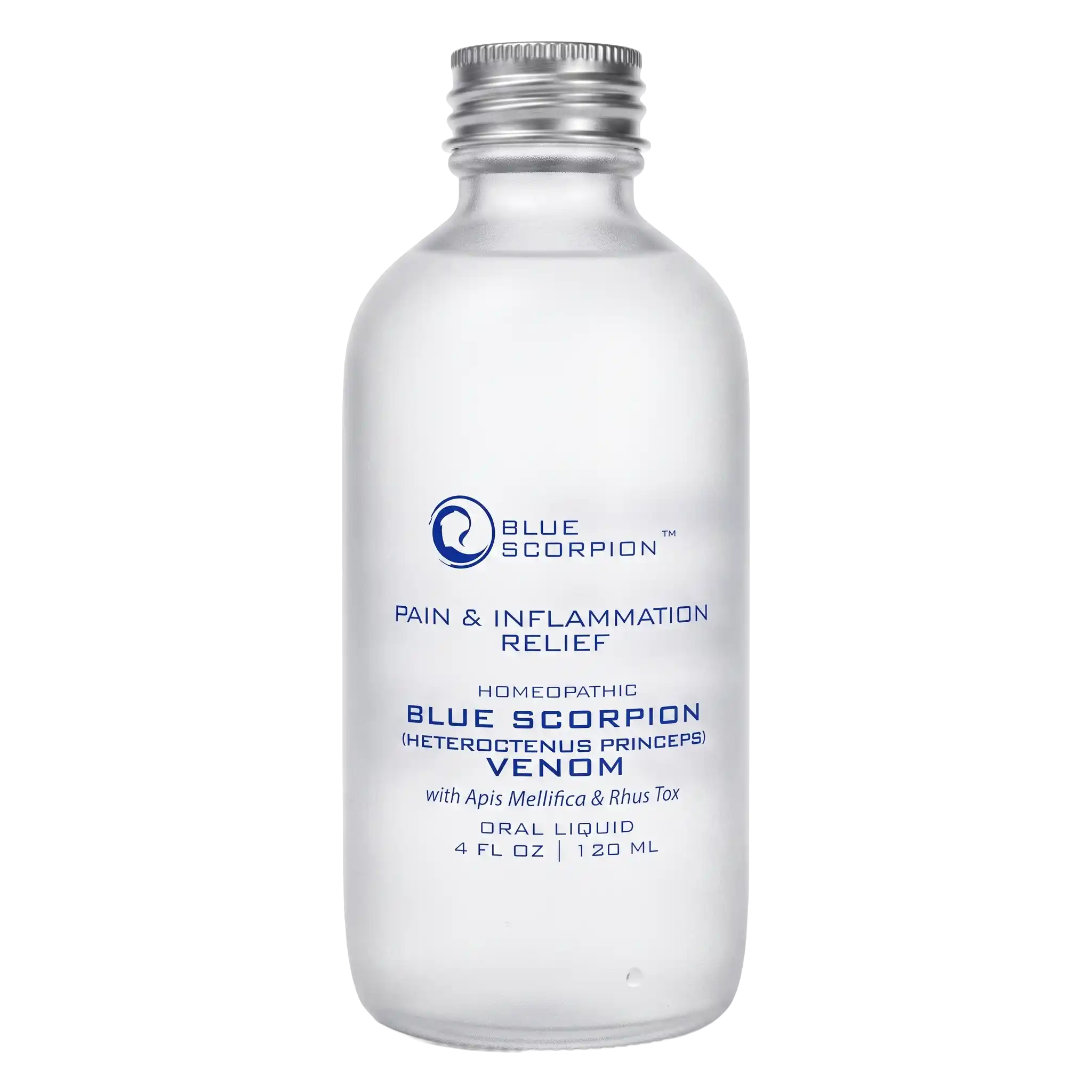
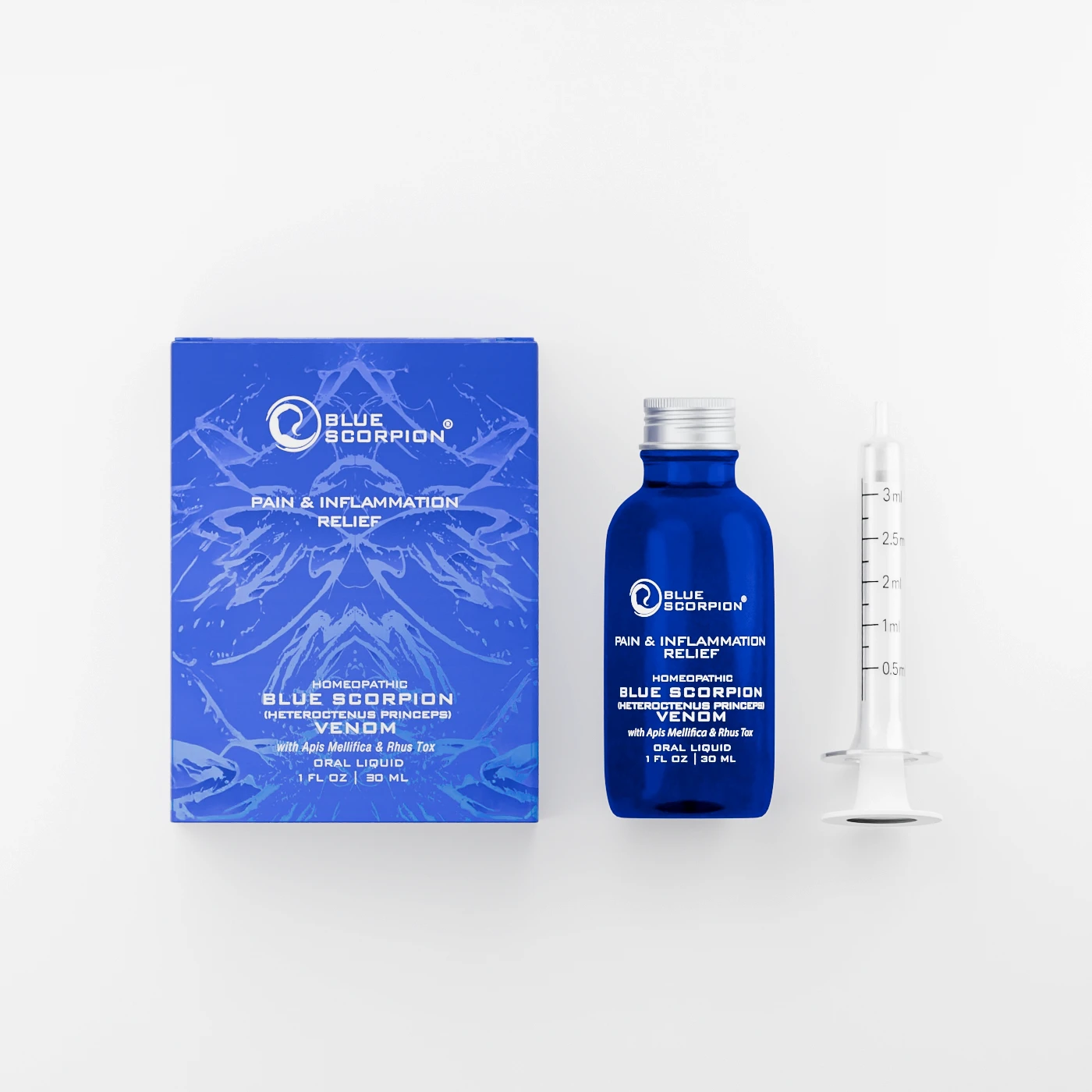
If you are comparing recovery options, you likely want to shorten the window between hard effort and feeling ready again. Blue Scorpion is a non-opioid, alcohol-free homeopathic formula derived from naturally occurring peptides, traditionally used for the temporary relief of pain and inflammation, body aches, and post-training soreness.* It's TruShield Certified and tested for banned substances, a practical option for athletes and active adults who train hard.
Keep reading to learn how to evaluate recovery options and how homeopathic formulas fit into a serious training routine. We will also break down active ingredients such as Heteroctenus princeps and Rhus toxicodendron to help you make an informed choice.
What Post-Training Soreness and Inflammation Are Telling You
Your body is communicating something useful when it hurts after a hard session. The discomfort is not random. It is a signal from tissue that has been stressed or strained and is now in active repair.
The Difference Between Fatigue, Soreness, and Delayed Recovery
Acute fatigue shows up immediately after training and usually clears within a few hours with rest and food. Muscle soreness, especially the delayed kind, peaks around 24 to 72 hours post-workout and reflects micro-tears in muscle fiber. These are different experiences, and they respond to different interventions.
Inflammation sits underneath both. When tissue is damaged, the body sends blood flow and immune signals to the area. That is necessary and protective. The problem is that when the inflammatory response lingers, spreads to neighboring tissue, or compounds over back-to-back training days without enough recovery time between them.
Understanding this distinction matters because it changes how you approach support. Fatigue responds best to sleep and nutrition. Soreness responds to movement, circulation, and targeted relief. Persistent, spreading inflammation may need a more systemic approach.
When Normal Recovery Starts to Affect Performance
Most athletes can absorb a hard training session every 48 to 72 hours with proper support. When recovery slows, the gaps between sessions either widen or the quality of each session drops. Both outcomes limit progress.
Stiffness that lingers beyond day three, reduced range of motion the morning after training, and recurring soreness in the same muscle groups are signs that your current recovery approach is not keeping pace with your training load. These are not minor inconveniences. They are early indicators that your output is outpacing your repair.
The practical question is not whether you are sore. It is about whether your soreness pattern is predictable and manageable or is becoming a ceiling on what you can do. That distinction is where recovery support earns its place in the routine.
How Recovery Support Fits Into a Serious Training Routine
No supplement replaces the structural work of recovery. Sleep, food, and hydration are not optional extras. They are the system everything else runs on top of.
Why Sleep, Food, and Hydration Still Set the Baseline
Growth hormone peaks during deep sleep. Muscle protein synthesis, the process by which your body repairs and rebuilds fiber, requires both adequate protein intake and rest. Without those two things in place, most supplements have a fraction of their potential effect.
Hydration plays a direct role in how well nutrients move through the bloodstream to working tissue. Dehydrated muscle is slower to repair and more sensitive to soreness signals. Electrolyte balance, particularly magnesium and sodium, also affects how muscles contract and relax.
Think of sleep, food, and water as the floor. Everything else sits above it. If the floor is not solid, nothing stacked on top of it will perform the way it should.
Where Systemic Support and Targeted Relief Can Add Value
Once the baseline is covered, targeted support can help fill real gaps. Some ingredients address inflammation directly. Others support protein synthesis, reduce oxidative stress, or help the nervous system settle after intense output.
Creatine monohydrate has over 1,000 studies supporting it. Post-workout research shows it may help limit markers of muscle damage and inflammation when taken consistently. Omega-3 fatty acids, at doses of 2 to 3 grams of EPA and DHA combined, have a strong evidence base for reducing inflammation after training. Tart cherry extract is frequently cited for reducing acute muscle soreness after intense bouts.
Homeopathic formulas work differently. They are not nutritional supplements in the traditional sense. They are designed to support the body's own response to inflammation and discomfort.* The distinction matters when you are reading labels and trying to decide what role each product plays in your routine.
What to Look for on a Supplement Label
The label tells you more than the marketing copy ever will. Knowing what to read and what to skip past is the fastest way to separate credible products from noise.
Active Ingredients and Their Intended Role
Every supplement label lists the active ingredients and their stated purpose. For homeopathic products, that purpose is listed as temporary relief of specific symptoms. For nutritional supplements, the claim is usually a structure-or-function claim.
Look at the ingredient list and ask two questions: what is this ingredient meant to do, and at what concentration is it present? Proprietary blends that do not disclose individual ingredient amounts are a warning sign. Precise labeling with named ingredients and listed potencies shows the manufacturer is confident in what they have formulated.
Homeopathic labels use potency notations such as 3X or 6X to indicate the dilution level. These are standardized notations governed by the Homeopathic Pharmacopeia of the United States.
Why Non-Opioid and Alcohol-Free Formulas Matter
For competitive athletes, the ingredient profile is not just a wellness question. It is a compliance question. Any substance that interacts with a banned-substance policy is a career risk, not just a health consideration.
Non-opioid and alcohol-free formulas reduce that risk. They also make daily, consistent use more practical. Products that rely on numbing, sedating, or stimulant-adjacent mechanisms are not suitable for morning and evening use across a training cycle.
A formula that is non-opioid, non-stimulant, and not known to interact with medications when used as directed is genuinely easier to integrate into a long-term routine than one that comes with a list of contraindications.
Serving Format, Daily Use, and Practical Compliance
A supplement that is hard to take consistently is one you will stop taking. Format matters more than people give it credit for. Sublingual liquids are absorbed quickly and require no mixing or preparation. Capsules are portable but slower to absorb. Powders require a shaker and timing around workouts. Each format fits different lifestyles and training schedules differently:
Sublingual liquid: fast absorption, high daily ease, moderate portability.
Capsule: moderate absorption, high daily ease, high portability.
Powder: moderate absorption, moderate daily ease, low portability.
Tart cherry concentrate: moderate absorption, low daily ease, low portability.
Daily use matters most for systemic support. A product taken twice daily on a consistent schedule will almost always outperform one taken occasionally after the worst sessions.
Understanding Homeopathic Ingredients in Recovery Formulas
Homeopathic ingredients are not the same as herbal extracts or nutritional compounds. They follow a specific formulation method, and their active ingredients come from carefully selected biological sources.
Heteroctenus Princeps and Peptide-Rich Ingredient Interest
Heteroctenus Princeps is the Caribbean Blue Scorpion, found in a narrow geographic area in the Dominican Republic. Its venom is composed of peptides, amino acids, trace minerals, and proteins. Certain peptides in the blue scorpion venom have been studied for their interaction with pathways involved in nerve signaling, muscle contraction, and immune response.*
In homeopathic formulation, Heteroctenus Princeps venom is processed at a highly diluted concentration, standardized in this case to 3X potency. The result is an ingredient profile unlike anything found in standard supplement stacks.
It is not a botanical or a synthetic compound. It is a peptide-rich biologic from a rare source, applied through homeopathic principles. This is an unusual ingredient for a recovery product, and that specificity is worth taking seriously rather than dismissing.
Apis Mellifica for Swelling and Discomfort Context
Apis Mellifica is derived from the honeybee and has been used in homeopathic medicine to support temporary relief of swelling, redness, and discomfort. Post-training inflammation often presents with these exact characteristics, particularly in joints and connective tissue that bear load during exercise.
In a multi-ingredient homeopathic formula, Apis Mellifica contributes to the swelling and inflammatory response component. It is listed at 6X potency in formulas like Blue Scorpion's, making it a recognized homeopathic active ingredient under HPUS standards.
Rhus Toxicodendron for Stiffness and Muscle Tension Context
Rhus toxicodendron, derived from poison ivy, is one of the most widely recognized homeopathic remedies for joint and muscle stiffness. It is traditionally associated with relief from stiffness that worsens with rest and improves with movement, a pattern many athletes recognize from the first few steps after sitting down post-training.
It is also listed for support of skin irritation and discomfort in homeopathic use, and at 6X potency it fits within the same standardized classification framework. For athletes dealing with morning stiffness or post-session tightness, this ingredient is worth understanding before you write off homeopathic formulas entirely.
How to Evaluate Credibility, Safety, and Sport Readiness
Not every recovery product makes honest claims. Knowing what legitimate credibility looks like protects you from spending money on products that cannot back up what they promise.
FDA NDC Listing and Why It Signals Product Classification
An FDA National Drug Code means the product is registered with the FDA as a drug product, not as a dietary supplement. That distinction matters. It means the product has gone through a classification process, carries specific NDC numbers, and is manufactured under standards that apply to drug products rather than the looser framework governing supplements.
When comparing recovery products, NDC listing is one of the clearest signals that a manufacturer is operating within a recognized regulatory framework.
Manufacturing Standards, Testing, and Banned-Substance Screening
Look for cGMP (current Good Manufacturing Practice) facility designation. This tells you the product was made under consistent, documented processes rather than in uncontrolled conditions. For athletes in tested sports, third-party banned-substance screening is a non-negotiable layer on top of that.
TruShield certification and testing through ISO 17025-accredited, WADA-based laboratories are the kinds of third-party verification that carry real weight in competitive sports contexts. Products certified for sport have been screened for 400 or more banned substances through labs that meet international accreditation standards.
cGMP manufacturing facility
FDA NDC registration (for drug products)
Third-party banned-substance testing
ISO 17025-accredited lab verification
WADA-compliant testing protocols
What Realistic Claims and Disclaimers Should Look Like
Any product that claims to cure, treat, or prevent a named disease on its label should raise an immediate flag. Legitimate homeopathic products use language like "temporary relief" followed by a specific symptom, such as pain, inflammation, or stiffness, and include standard asterisk disclaimers.
Realistic recovery support claims are specific and bounded. They name a symptom, they acknowledge that results are tied to consistent use, and they do not promise outcomes they cannot deliver. Products that use superlatives without specifics are usually filling gaps in their evidence base with enthusiasm.
Choosing a Recovery Option That Matches Your Training Demands
The best recovery product for you is not the one with the most recognizable brand. It is the one that fits your training frequency, your compliance habits, and your standards for what goes into your body.
When a Daily Formula Makes More Sense Than Occasional Use
If you train four or more days per week, occasional-use products won't keep pace with your recovery needs. A daily formula, taken consistently on a morning and evening schedule, builds a more stable foundation than something you remember to use only on your worst recovery days.
Daily use also allows you to observe patterns. If you take something consistently for 30 days and track your soreness levels, sleep quality, and next-day readiness, you get useful information. Occasional use gives you noise, not signal.
If daily inflammation is slowing you down, one bottle covers more than you might expect. Try It Now and see what systemic support feels like.
How to Compare Clean Recovery Products Without Hype
When comparing products, build a simple checklist:
Does it list every active ingredient with potency or dose?
Is it non-opioid and alcohol-free?
Is it manufactured in a cGMP facility?
Has it been tested for banned substances by a credible third party?
Does the label use realistic symptom language with appropriate disclaimers?
A product that passes all five of those questions is worth a closer look. One that fails two or more is probably using its marketing budget to paper over its formulation gaps.
Comparing recovery products on those five criteria rather than on packaging or endorsement visibility will consistently lead you to better decisions.
Frequently Asked Questions
After a Hard Session, What Helps Soreness and Fatigue Ease the Fastest Without Opioids or Alcohol?
Prioritizing protein intake within two hours post-workout, rehydrating with electrolytes, and getting adequate sleep that night are the most reliable starting points. Non-opioid homeopathic formulas taken sublingually can support temporary relief of pain and inflammation alongside those foundational steps, without introducing alcohol or opioid compounds into the equation.
Which Ingredients Have the Strongest Human Evidence for Speeding Strength and Performance Recovery Between Workouts?
Creatine monohydrate has the strongest and most consistent evidence base, with over 1,000 studies supporting its role in reducing markers of muscle damage and replenishing phosphocreatine stores. Omega-3 fatty acids at 2 to 3 grams of EPA and DHA daily and tart cherry extract both have solid support for reducing inflammation and acute soreness after training.
How Do Magnesium Forms (Glycinate vs Citrate vs Malate) Differ for Cramps, Sleep Quality, and Next-Day Muscle Tightness?
Magnesium glycinate is the most commonly recommended form for sleep quality and nerve calming because it is bound to glycine, an amino acid with its own calming properties. Magnesium citrate absorbs well and is often used for general supplementation and muscle cramps. Magnesium malate is sometimes favored for energy production and daytime muscle function because malate is involved in the ATP cycle.
What Should Women Prioritize in Recovery Support During High-Volume Training, Including Iron Status, Protein Timing, and Creatine Dosing?
Women in high-volume training phases should pay particular attention to iron status, as heavy training combined with menstrual losses can deplete ferritin and blunt recovery and energy. Protein timing matters as much as total intake; spreading protein across meals rather than concentrating it into a single window improves muscle protein synthesis. Creatine at 3 to 5 grams daily is beneficial for women and is often under-used in female athlete populations.
What Changes in Recovery Support Are Most Relevant for Men Focused on Muscle Growth, Including Creatine, Omega-3s, and Sleep Aids?
For men focused on hypertrophy, creatine monohydrate at 3 to 5 grams daily remains the highest-value supplement for strength and recovery. Omega-3s at 2 to 3 grams EPA and DHA help manage the inflammation that accumulates across training cycles. Sleep quality is often the limiting factor in muscle growth, and magnesium glycinate taken in the evening is a clean, non-habit-forming option for improving sleep depth without sedatives.
After Surgery, Which Supplements Are Commonly Avoided Due to Bleeding Risk or Medication Interactions, and What Options Are Typically Discussed Instead?
Omega-3 fatty acids, vitamin E, and fish oil are commonly paused before and after surgery because of their blood-thinning properties. Herbal supplements, including turmeric, ginger, and garlic, are also typically avoided during surgical recovery windows for similar reasons.
Homeopathic products listed as not known to interact with medications when used as directed are sometimes discussed as alternatives, but any supplement decision in a post-surgical context should be reviewed with the treating physician first.
Elevate Your Recovery Strategy
Recovery is the silent engine of athletic progress. When you support your body's natural repair processes with clean, non-opioid formulas, you shorten the gap between sessions and improve training quality.
Explore Blue Scorpion's full line of relief products, a non-opioid, alcohol-free homeopathic formula derived from naturally occurring peptides, used for the temporary relief of pain and inflammation, body aches, and discomfort absorbed sublingually for relief where you need it.* It is built for athletes who value transparency.
*These statements and claims are based on traditional homeopathic practice, not accepted medical evidence, and are not FDA evaluated. This product is intended for the temporary relief of pain, inflammation, and symptoms. Individual results may vary.