

Nerve pain announces itself in ways that are hard to ignore and even harder to explain to someone who has not felt it. It is distinct from a sore muscle or a stiff joint because it originates in the nervous system itself, and it rarely responds to the same strategies you would use for everyday aches.
For many adults living with this kind of discomfort, conventional pharmaceutical options come with side effects or dependency concerns that feel like trading one problem for another. That search for a non-opioid, non-pharmaceutical path is exactly why homeopathic formulas have attracted serious attention.
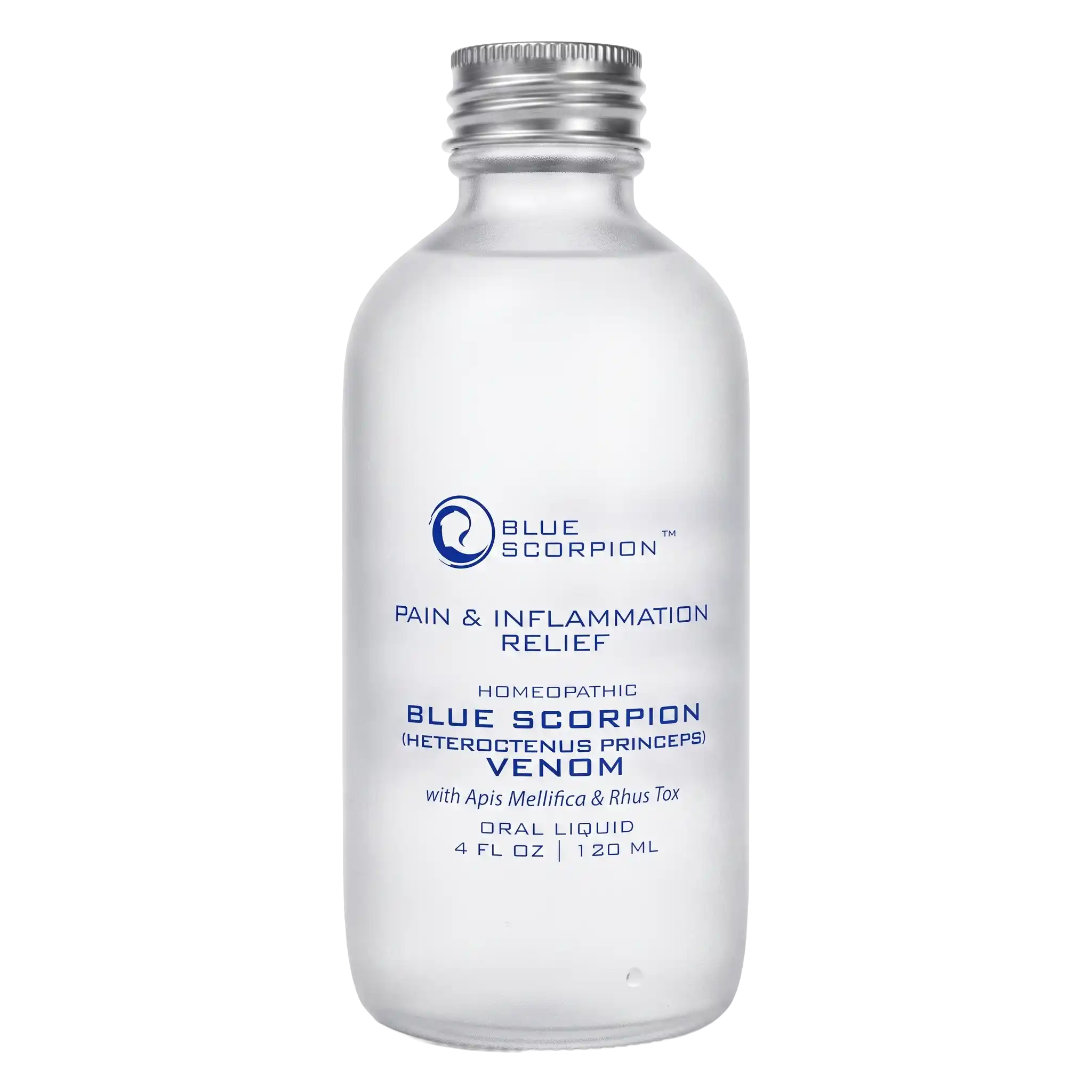
Blue Scorpion Pain and Inflammation Relief is an FDA NDC-listed homeopathic option formulated around Heteroctenus princeps venom, a peptide-rich biologic processed through a proprietary polarization method, then diluted into a homeopathic formula for the temporary relief of pain and inflammation, including minor nerve-pain and discomfort.
Keep reading to learn how nerve discomfort works, what natural approaches may support comfort, and how to evaluate homeopathic formulas with real credibility behind them.
What Nerve Discomfort Can Feel Like
Nerve pain is not a single sensation. It can shift between burning, stabbing, electric, and dull depending on the day, the activity, and even the time of night.
Common Sensations and Daily Triggers
Most people describe nerve discomfort using words like burning, tingling, pins and needles, numbness, or shooting pain. These sensations occur because nerves transmit signals throughout the body, and when that transmission is disrupted, distorted sensations follow.
Sitting for long periods, repetitive movements, poor posture, and pressure on specific spinal regions are common day-to-day triggers. Temperature changes can also provoke flares, with cold weather frequently intensifying burning or aching sensations in the hands and feet.
Understanding your personal triggers is genuinely useful. Once you can identify what precedes a flare, you can begin building a routine that reduces those exposures.
When Ongoing Symptoms Deserve Medical Attention
Not every case of nerve discomfort is benign, and it is worth knowing when to involve a clinician. Symptoms that affect your ability to walk safely, cause loss of bladder or bowel control, or appear suddenly after an injury warrant prompt medical evaluation. These are not situations to manage at home.
Symptoms that are persistent but manageable, such as nighttime tingling, mild burning, or intermittent shooting sensations in the limbs, are the kind most adults try to address through natural approaches. The key distinction is whether your symptoms are stable and mild versus progressive and disabling.
When symptoms feel manageable but are clearly limiting your daily comfort, the question worth asking is: what is the full picture of factors driving this discomfort, not just the nerve itself?
Why a Broader Relief Plan Often Works Better
Nerve pain rarely exists in isolation. It tends to respond to the full context of how you are sleeping, moving, and managing stress, not just to a single targeted remedy.
The Role of Sleep, Stress, and Activity Load
Poor sleep and nerve pain share a two-way relationship. Inadequate rest raises inflammation markers and lowers your pain threshold, making existing discomfort feel sharper. At the same time, nerve discomfort frequently disrupts sleep, creating a cycle that is difficult to interrupt with any single approach.
Stress amplifies the nervous system's perception of pain. When cortisol stays elevated, nerve sensitivity can increase, which is one reason people often notice flares during stressful periods, even when nothing physically changes. Mind-body techniques such as slow breathing, structured rest periods, and consistent sleep schedules address this layer directly.
Activity load matters too. Both overtraining and prolonged inactivity can worsen nerve irritation. Finding a sustainable middle ground where you move enough to support circulation without exceeding recovery capacity is a practical goal worth pursuing.
How Inflammation, Tension, and Irritation Can Overlap
Nerve pain frequently coexists with muscle tension and localized inflammation. A tight muscle pressing against a nerve can create sensations that feel identical to nerve damage, even when the nerve itself is intact. Similarly, inflammatory activity in the tissue surrounding a nerve can increase sensitivity and discomfort.
This overlap is why approaches that address inflammation and muscular tension, not just nerve signals, often produce more noticeable results. Treating only one layer while ignoring the others tends to produce limited and short-lived relief.
The practical takeaway is that effective natural nerve pain relief usually requires addressing multiple systems at once, which leads directly to the question of which approaches are worth building into a daily routine.
Natural Approaches That May Support Comfort
Several well-documented natural strategies may support comfort in people managing nerve discomfort, and they work best when layered rather than used in isolation.
Gentle Movement and Mobility Work
Gentle, consistent movement is one of the most broadly supported approaches for nerve pain. It improves circulation, reduces muscle tightness that can compress nerves, and encourages the release of endorphins that naturally support comfort.
Low-impact options such as walking, swimming, yoga, and tai chi are well tolerated by most adults managing nerve discomfort. Nerve-gliding exercises, which involve moving the limb through a range that gently mobilizes the nerve itself, may also reduce irritation over time when performed consistently.
The goal is not intensity. Ten to twenty minutes of daily gentle movement tends to outperform sporadic, aggressive sessions for nerve comfort.
Dietary Patterns and Nutrient Considerations
Certain nutrients play a specific role in nerve function and health. B vitamins, particularly B12, are essential for maintaining the myelin sheath that surrounds and protects nerve fibers. B12 deficiency is one of the more common and correctable contributors to nerve discomfort.
Magnesium supports nerve signaling and muscular relaxation. Omega-3 fatty acids found in fatty fish have well-documented anti-inflammatory properties that may support the tissue environment around irritated nerves. Foods high in refined sugar and processed oils can increase systemic inflammation, which is worth limiting if nerve discomfort is an ongoing concern.
A dietary pattern that emphasizes leafy greens, whole grains, lean proteins, and healthy fats gives the nervous system a better foundation to work with day to day.
Topical Options Such as Nerve Pain Relief Cream
Topical approaches are often the first thing people reach for because they offer localized application directly at the site of discomfort. Capsaicin-based creams work by depleting substance P, a chemical involved in pain signaling, through repeated application. They require consistent use over several weeks to produce noticeable results.
Topical options are practical for hands, feet, and localized areas but do not address systemic or multi-site nerve discomfort on their own. They can be a useful addition to a broader routine rather than a standalone solution.
The limits of topical-only approaches point toward the value of systemic support, which is where homeopathic formulas enter the picture.
Where Homeopathic Formulas Fit
Homeopathic formulas take a systemic approach, meaning they are designed to support the body's response to discomfort across multiple symptom expressions rather than targeting a single isolated area.
How Systemic Homeopathic Support Is Used
Homeopathic remedies are prepared through a process of serial dilution and potentization using natural source substances. The resulting formulas are taken orally, typically sublingually, and are intended to work with the body's own response rather than overriding it through pharmacological force.
Systemic formulas are designed for multi-symptom support, making them relevant to nerve discomfort that accompanies joint stiffness, muscular tension, or broader inflammation.* They are non-opioid, non-stimulant, and not known to interact with medications or supplements when used as directed, which makes them compatible with existing wellness routines for most adults.
Ingredients to Know: Heteroctenus Princeps, Apis Mellifica, and Rhus Toxicodendron
The active ingredients in a homeopathic nerve formula tell you a lot about what it is designed to address. Here is a plain-English breakdown of three worth knowing:
Heteroctenus Princeps venom: A peptide-rich biologic derived from Caribbean Blue Scorpion venom. Certain peptides in this venom have been studied for their interaction with pathways involved in nerve signaling, muscle contraction, and immune response.* The raw venom is peptide-rich; the finished homeopathic product is a highly diluted preparation.
Apis Mellifica: Derived from the honeybee. Traditionally used in homeopathy to support temporary relief from swelling, redness, and discomfort.*
Rhus Toxicodendron: Derived from poison ivy. Traditionally used to support relief from joint discomfort, muscle stiffness, and skin irritation.*
Together, these ingredients are traditionally used for the temporary relief of overlapping concerns. Nerve irritation and discomfort, inflammation, and muscular tension, rather than one symptom in isolation.
What to Expect From Daily Use and Consistency
Homeopathic formulas are designed for consistent daily use, not single-dose relief. Most adults taking a systemic formula use it twice daily, in the morning and evening, to maintain steady support throughout the day.
Consistency matters because homeopathic support is cumulative rather than immediate, unlike a pharmaceutical analgesic. Building a habit around a fixed dosing time, such as before breakfast and before dinner, tends to support better adherence.
Approaching a homeopathic option with realistic expectations, namely ongoing support for everyday discomfort rather than instant elimination of symptoms, sets you up for a more useful experience.
How to Evaluate Non-Pharmaceutical Options
Not every product that claims to be natural is backed by meaningful quality standards. Knowing what to look for protects you from wasting money and helps you find options you can trust.
Reading Labels, Directions, and Safety Notes
A credible homeopathic product lists its active ingredients with their dilution designations, such as 3X or 6X, alongside clear dosing instructions for adults and children. The label should also include storage guidance, warnings for pregnancy or breastfeeding, and a recommendation to consult a physician for children under a specified age.
Directions matter practically as well. Sublingual administration, holding the liquid under the tongue for 15 seconds before swallowing, is the standard method for liquid homeopathic formulas and supports absorption before the formula reaches the digestive tract.
If a label lacks ingredient-level specificity or gives vague instructions, that is a meaningful signal about overall quality standards.
Credibility Signals Such as FDA NDC Listing and Manufacturing Standards
Here is what to look for when comparing homeopathic options:
FDA National Drug Code (NDC): Confirms the product is listed with the FDA as a homeopathic OTC medicine.
cGMP-certified manufacturing: Ensures consistent quality and safety standards in production.
HPUS compliance: Confirms adherence to the Homeopathic Pharmacopeia of the United States.
Banned substance testing: Relevant for athletes; confirms the product is competition-safe.
ISO 17025-accredited lab testing: Signals testing performed to internationally recognized laboratory standards.
A product carrying all of these signals has met a meaningful set of external standards beyond its own marketing claims. That is a reasonable baseline for any non-pharmaceutical option you plan to use daily.
Choosing a Practical Next Step
The most effective approach to natural nerve pain relief is one you can actually maintain, not one that requires a dramatic overhaul of your daily life.
Building a Simple Routine Around Your Symptoms
Start with the most accessible layer: sleep, movement, and diet. Aim for consistent sleep and wake times. Add ten to twenty minutes of gentle movement each morning. Reduce processed foods and increase B-vitamin-rich and omega-3-rich options over the following weeks.
Layer in a topical approach for localized discomfort if that is part of your symptom picture. Add a systemic homeopathic formula if your discomfort is multi-site or if topical options alone feel insufficient. Building one habit at a time is more sustainable than attempting everything at once.
Track your symptoms loosely, not obsessively. Noticing patterns over two to four weeks gives you useful feedback about what is helping and what is not.
A Low-Pressure Look at Blue Scorpion as a Homeopathic Option
If you are looking for a systemic homeopathic formula with documented credentials, Blue Scorpion Pain and Inflammation Relief is worth a clear-eyed look. It is the only blue scorpion venom-based homeopathic medicine listed with FDA National Drug Codes, manufactured in a cGMP facility, and tested for over 400 banned substances in ISO 17025-accredited labs.
The formula combines Heteroctenus Princeps, Apis Mellifica, and Rhus Toxicodendron, traditionally used for the temporary relief of pain and inflammation including nerve-related pain and irritation, discomfort, inflammation, and muscular tension. It is non-opioid, alcohol-free, and not known to interact with medications when used as directed.
Ready to try a non-opioid option built around one of the rarest ingredients on earth? Get Relief with Blue Scorpion today.*
Frequently Asked Questions
Why Does Nerve Pain Flare at Night and What Can You Do at Home to Calm It Down?
Nerve pain often intensifies at night because daytime distractions fade and the nervous system becomes more sensitive during rest. Keeping your sleep environment cool, using gentle stretching before bed, and maintaining a consistent sleep schedule may reduce nighttime flares. A systemic homeopathic formula taken in the evening as part of a routine is one approach some adults find supports nighttime comfort.
What Herbs and Botanicals Are Most Studied for Burning or Shooting Nerve Pain, and How Should They Be Used?
Turmeric, specifically its active compound curcumin, is among the most studied for its anti-inflammatory properties relevant to nerve discomfort. Capsaicin from cayenne pepper is used topically and may reduce pain signaling over time with consistent application.* These are typically used as teas, supplements, or topical preparations and work best as part of a broader plan.
When Nerve Pain Is in the Feet or Toes, What Practical Steps Help Reduce Tingling and Sensitivity During the Day?
Warm foot soaks may temporarily ease tingling and improve local circulation.* Wearing well-cushioned, properly fitted shoes reduces mechanical pressure on nerve-dense areas. Gentle foot and ankle mobility exercises performed each morning can also help manage sensitivity over time.
What Can Help Nerve Pain in the Legs Without Opioids, and When Is It a Sign You Should See a Clinician?
Low-impact movement such as walking, swimming, or cycling supports circulation and may reduce leg nerve discomfort over time.* Natural topical options and systemic homeopathic formulas are non-opioid paths worth exploring for manageable symptoms.* You should consult a clinician if leg nerve pain is severe, worsening rapidly, or accompanied by weakness or loss of balance.
For Nerve Pain in the Hands or Wrists, What Stretches, Bracing, and Topical Options Are Most Likely to Help?
Gentle wrist flexor and extensor stretches performed several times daily may help reduce tension that contributes to hand nerve discomfort. Wrist braces worn at night prevent positions that compress nerves during sleep. Topical capsaicin creams applied consistently to the affected area may support discomfort relief over several weeks.
If Nerve Pain Starts in the Neck or Back and Radiates, What Red Flags Mean You Should Get Evaluated Right Away?
Radiating nerve pain from the neck or back that causes sudden weakness in an arm or leg is a red flag requiring prompt evaluation. Loss of bowel or bladder control alongside back pain is also a medical emergency. Nerve pain that appeared immediately after trauma, a fall, or an injury should be assessed by a clinician before any home management begins.
A Layered Approach to Natural Relief
Nerve pain is complex, but your approach to relief doesn't have to be overwhelming. By combining lifestyle adjustments with credible homeopathic support, you can address burning and tingling sensations from multiple angles.
Blue Scorpion Pain and Inflammation Relief is designed to fit seamlessly into this holistic routine. It provides a non-opioid, systemic option for those ready to move past the limitations of temporary topical fixes. Experience the benefits of Blue Scorpion and take a practical step toward reclaiming your daily comfort.
These statements and claims are based on traditional homeopathic practice, not accepted medical evidence, and are not FDA evaluated. This product is intended for the temporary relief of pain, inflammation, and symptoms. Individual results may vary.