
Your legs ache the moment you finally lie down. There's a pulling, crawling feeling deep in your calves, sometimes your thighs, and the only thing that seems to help is moving them. You shift, stretch, get up and pace the hallway, and by the time you settle back down, you've lost another hour of sleep.
This kind of nighttime leg discomfort has a few different causes, and each calls for a different response. Some cases respond well to simple things you can do tonight, like stretching, warmth, and a steadier bedtime routine, while others point to something that needs a doctor's attention, like low iron or a neurological condition called Restless Legs Syndrome.
This article walks through what's likely causing the sensation, what to try before bed, which signs mean it's time to call a doctor, and how homeopathic products fit into the picture for everyday leg discomfort.
Why Your Legs May Feel Restless at Night
Nighttime leg discomfort shows up as a set of recognizable sensations, and most people describe it similarly: crawling, tingling, or an ache that eases only with movement. Certain habits make it worse, and one specific pattern (Restless Legs Syndrome) is different from general achiness in ways that matter for treatment.
Common Sensations and Patterns
The most common description is a creeping or crawling feeling somewhere in the leg, often the calf. Some people describe it as an itch under the skin; others call it a pulling or tugging sensation.
It typically shows up when you're sitting or lying still, especially in the evening. Moving the leg, walking, or stretching usually brings quick relief, which is part of why it's so disruptive to sleep.
Everyday Triggers That Can Make Symptoms Worse
A long day on your feet, dehydration, and sitting for extended periods can all make legs feel more restless at night. Caffeine, alcohol, and nicotine are common aggravators too, according to the Sleep Foundation.
Stress and poor circulation also play a role. If you notice symptoms worsening on days you skip your usual walk or drink extra coffee, pay attention to that pattern.
How Restless Legs Syndrome Differs From General Leg Discomfort
Restless Legs Syndrome (RLS), also called Willis-Ekbom disease, is a diagnosed neurological condition with a specific pattern: an irresistible urge to move the legs, paired with uncomfortable sensations that get worse at rest and in the evening. General leg discomfort from fatigue or poor circulation can feel similar but doesn't follow that same predictable trigger pattern.
The distinction matters because RLS often has an underlying cause, like low iron, that a doctor needs to check. Occasional achy, restless legs after a long day usually aren't the same as RLS, but if the pattern repeats several nights a week, it's worth mentioning to a doctor.
What Can Help Before Bed
Simple physical steps often calm restless legs enough to fall asleep, and they work best when done consistently rather than as a one-time fix. Gentle movement, heat, and a predictable wind-down routine are the three most useful tools.
Try Gentle Movement and Calf Stretches
A short stretch or slow walk before bed can ease the crawling sensation that builds up after sitting still. Calf stretches, ankle circles, and a few minutes of walking around the house tend to help most people reset the feeling in their legs.
Regular daytime exercise also reduces how often nighttime symptoms show up, according to Cleveland Clinic. Even a short daily walk seems to make a difference over time.
Use Heat, a Bath, or a Brief Massage
Warm water relaxes muscles and improves blood flow, which can ease restless legs before bed. Cleveland Clinic notes that a warm bath can help your body unwind and may make symptoms feel less intense, and that alternating warm and cool water can have a similar calming effect on leg tension for some people.
A warm compress or a few minutes of self-massage on the calves works as a faster option if a full bath isn't practical.
Build a Sleep Routine That Reduces Leg Stimulation
A consistent bedtime, a cool, dark room, and cutting caffeine in the afternoon all reduce the odds of restless legs interrupting sleep. Keeping your legs elevated slightly or using a light blanket instead of a heavy one can also reduce irritation for some people.
Routine matters more than any single trick. Going to bed and waking up at the same time each day, even on weekends, tends to reduce how often symptoms flare.
Check for Causes That Need Medical Attention
Certain causes of nighttime leg discomfort need a doctor's evaluation rather than home care alone, and low iron is one of the most common. Some medications and habits make symptoms worse, and specific warning signs mean it's time to stop self-treating and get checked.
Iron Levels and Other Health Factors
Low iron is one of the most well-established contributors to restless legs, and a doctor can check this with a simple blood test. The Sleep Foundation notes that a doctor may recommend an iron supplement if your levels come back low.
Pregnancy, kidney disease, and certain nerve conditions are also linked to restless leg symptoms. You can't diagnose these on your own, since the right next step depends on bloodwork and a doctor's exam.
Medicines and Habits That May Aggravate Symptoms
Some prescription medications, including certain antidepressants and allergy medicines, can worsen restless leg symptoms as a side effect. Caffeine, alcohol, and nicotine use are common everyday habits that make symptoms more frequent or intense.
If you started a new medication around the same time your leg symptoms began, mention that timing to your doctor. It may point to a straightforward fix, like adjusting the dose or switching medications.
When Nighttime Leg Symptoms Need a Doctor
See a doctor if leg discomfort happens most nights, regularly disrupts your sleep, or comes with an irresistible urge to move your legs that only eases with motion. This pattern, especially when it worsens in the evening and at rest, is worth raising as a possible case of Restless Legs Syndrome rather than managing it on its own.
Also get checked if you notice numbness, weakness, swelling, or leg pain that doesn't improve with rest and simple home care. These signs can point to a circulation problem or nerve issue that needs a proper diagnosis, not a home remedy.
Read more: Natural Nerve Pain Relief: What Helps Burning and Tingling Sensations
How to Think About Homeopathic Products
Homeopathic products are diluted preparations built on 18th-century theory, and understanding what the dilution numbers mean helps you read a label accurately. Traditional remedy profiles exist for many symptoms, but the evidence behind all of them is limited.
What Homeopathic Labels and Dilutions Mean
A number and letter on a homeopathic label, like 6X or 3X, tells you how many times the original substance was diluted. Higher numbers mean more dilution, which means less of the original substance remains in the final product.
This dilution process is central to homeopathic theory, developed in the late 1700s. It differs from herbal supplements or pharmaceutical drugs, which rely on measurable amounts of active compounds.
Traditional Remedy Profiles and Limits of the Evidence
Traditional homeopathic practice assigns specific remedy profiles to different sensations and patterns, matching a remedy to an individual's symptoms rather than to a diagnosis. Overviews of homeopathic approaches to restless legs describe remedies traditionally associated with cramping, burning, or aching sensations, as outlined by PeaceHealth.
These remedy profiles come from tradition and case observation, not clinical trials. No homeopathic remedy has scientific evidence showing it treats Restless Legs Syndrome or any diagnosed leg condition.
A Separate Note on Blue Scorpion for Everyday Discomfort
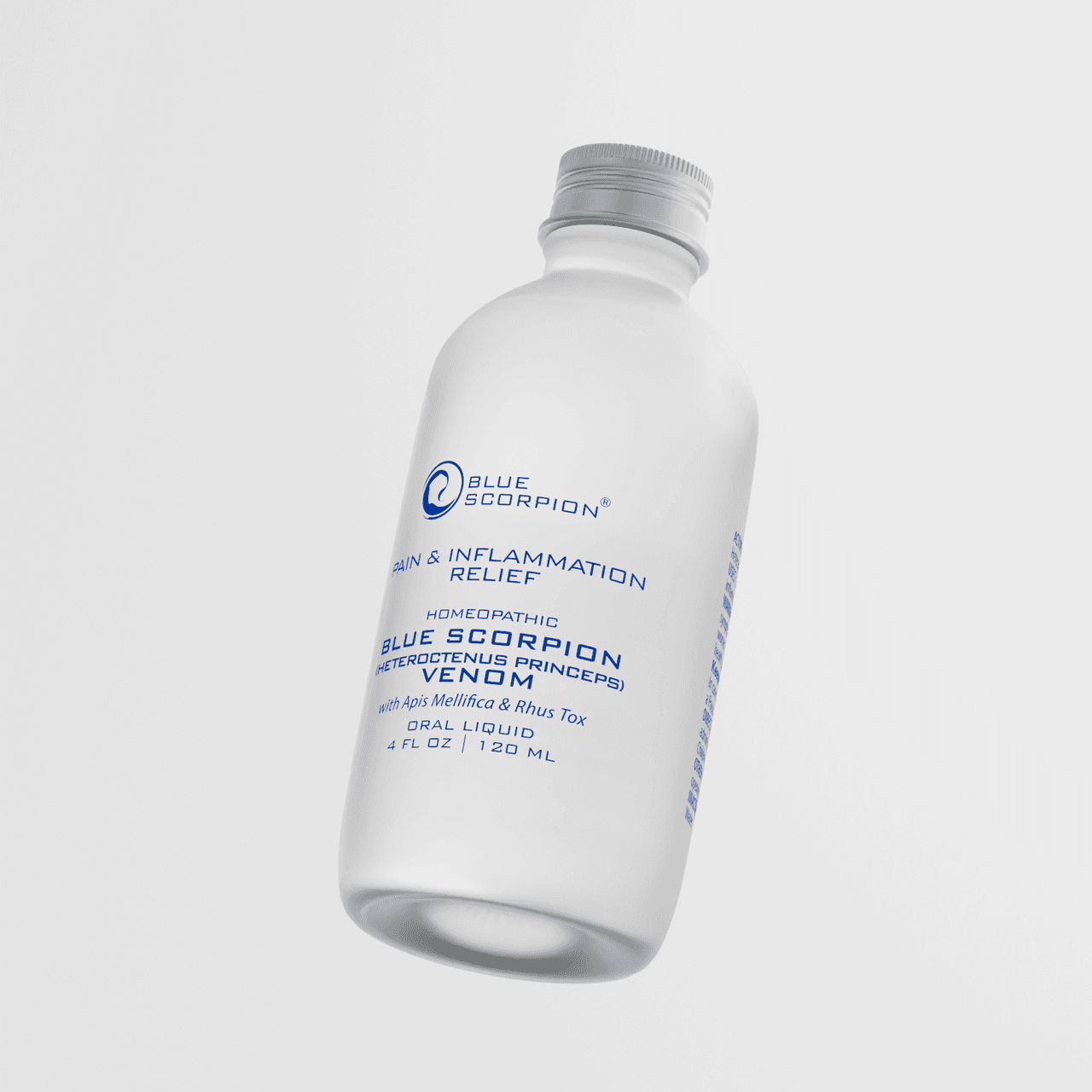
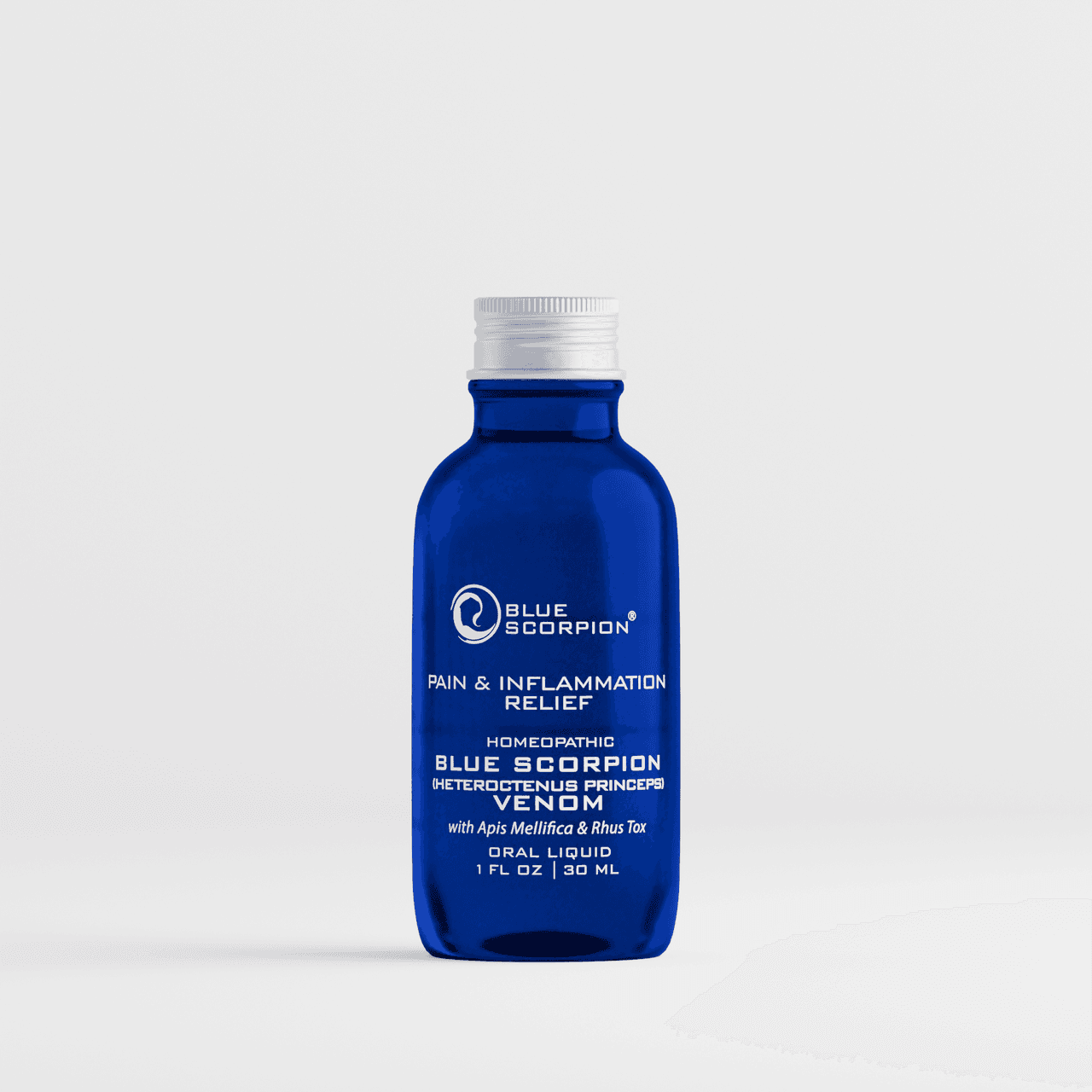
Blue Scorpion Pain & Inflammation Relief is not intended for Restless Legs Syndrome or any diagnosed neurological condition. It's a homeopathic liquid formula, taken under the tongue, formulated around Heteroctenus Princeps venom, Apis Mellifica, and Rhus Toxicodendron, and it's listed with the FDA under National Drug Codes 83627-901-02 and 83627-901-01, which reflects registration, not approval or a claim of effectiveness for any specific condition. You can read more about how each ingredient is traditionally used in our homeopathic pain relief guide.
If general, everyday body aches and muscle discomfort including muscle soreness is part of what you're dealing with, that's the level at which this kind of product is positioned.
Blue Scorpion Pain & Inflammation Relief is a homeopathic medicine. These statements are based on traditional homeopathic practice, not accepted medical evidence, and are not FDA evaluated. This product is intended for the temporary relief of pain, inflammation, and symptoms. It is not intended to diagnose, treat, cure, or prevent any disease. Individual results may vary.
Frequently Asked Questions
What immediately helps restless legs at night?
Gentle movement, like a short walk or calf stretches, often eases the crawling sensation quickly. A warm bath, compress, or brief massage can also relax the muscles and calm the feeling enough to fall asleep.
What naturally stops restless legs?
Regular daytime exercise, cutting caffeine and alcohol, and a consistent sleep schedule are the most well-supported natural approaches. Warm baths and stretching before bed help many people manage symptoms nightly.
What vitamin is lacking with restless leg syndrome?
Low iron is the most commonly linked deficiency with Restless Legs Syndrome, and a doctor can confirm it with a blood test. If levels are low, a doctor may recommend an iron supplement rather than a general vitamin.
What is the root cause of restless leg syndrome?
The exact cause of Restless Legs Syndrome isn't fully understood, but it's linked to how the brain uses dopamine and to low iron levels in some people. Pregnancy, kidney disease, and certain medications are also associated with RLS symptoms.
When should I see a doctor about restless legs?
See a doctor if the urge to move your legs happens most nights, disrupts your sleep, or comes with numbness, swelling, or weakness. This is especially important if symptoms follow the RLS pattern of worsening at rest and in the evening, since it may point to low iron or another treatable cause.
A Practical Plan for Calmer Nights
Start with the basics: a short evening stretch, a warm bath or compress, and a consistent bedtime. These three steps address the most common everyday triggers of restless legs and take only a few minutes to build into your routine.
If symptoms continue most nights despite consistent effort, ask your doctor to check your iron. Low iron is a well-documented, treatable cause of restless leg symptoms, and a simple blood test can rule it in or out.
Watch for the specific pattern of RLS: an urge to move that's hard to resist, worse at rest, worse in the evening, and relieved by motion. If that describes your nights, see a doctor rather than trying to manage it with home remedies alone.
If a homeopathic option fits your daily routine, Blue Scorpion's FDA NDC-listed, alcohol-free formula is traditionally used for temporary relief of minor muscle soreness and joint discomfort.*
Bundle and save on the formula. Shop the full lineup.
*Blue Scorpion Pain & Inflammation Relief is a homeopathic medicine. These statements are based on traditional homeopathic practice, not accepted medical evidence, and are not FDA evaluated. This product is intended for the temporary relief of pain, inflammation, and symptoms. It is not intended to diagnose, treat, cure, or prevent any disease. Individual results may vary. This product is not intended to diagnose, treat, cure, or prevent any disease, including Restless Legs Syndrome.