
Your knee is warm and puffy by the end of the workday. Your lower back locks up after sitting through a movie. A shoulder throbs every time you reach overhead, and the ache lingers long after you stop moving. That kind of pain does not stay in one place in your life. It changes how you sleep, how you train, and how much you want to do tomorrow.
Homeopathy is one option people look into for this kind of everyday discomfort. For an independent overview of what homeopathy is and what the evidence does and doesn't show, see NCCIH's homeopathy overview.
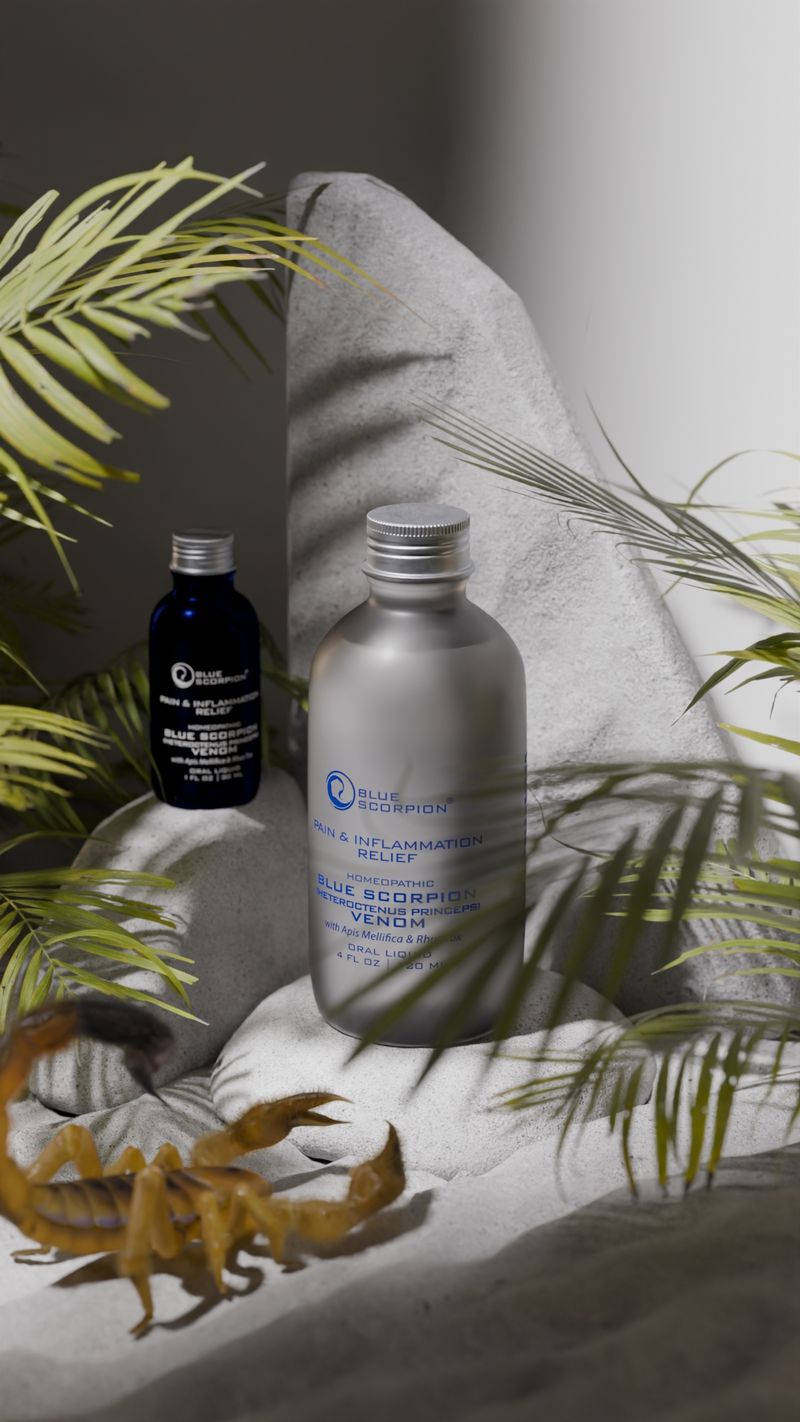
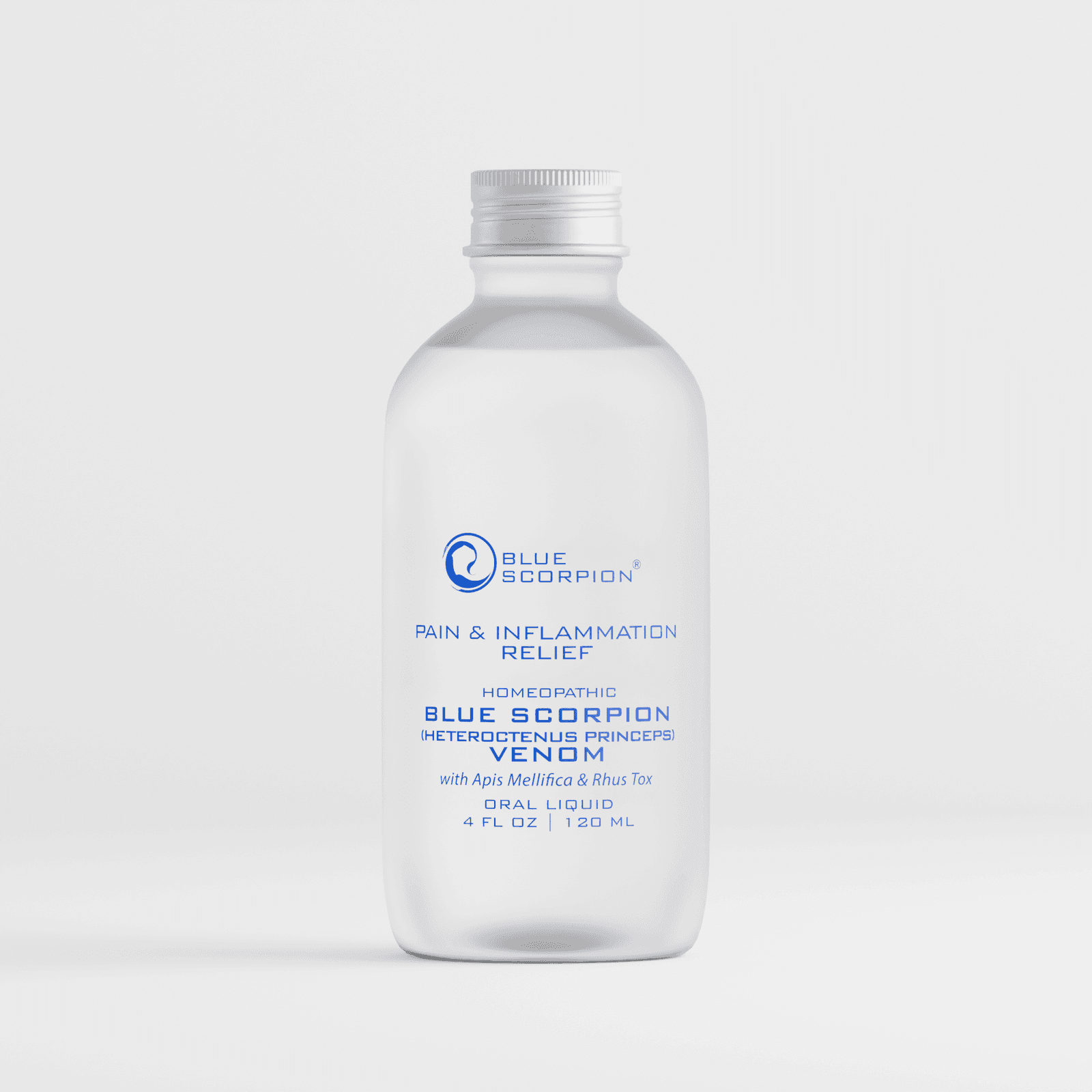
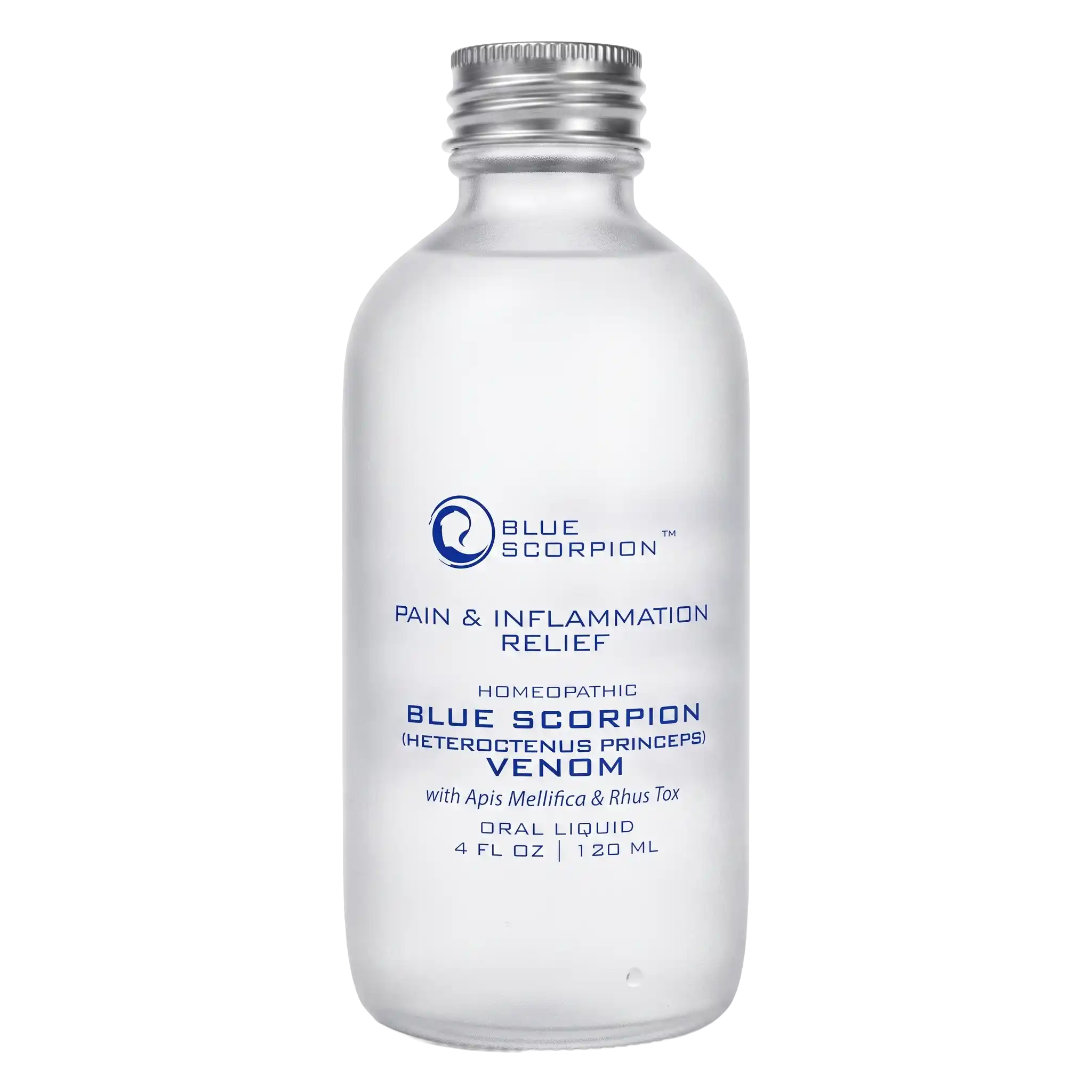
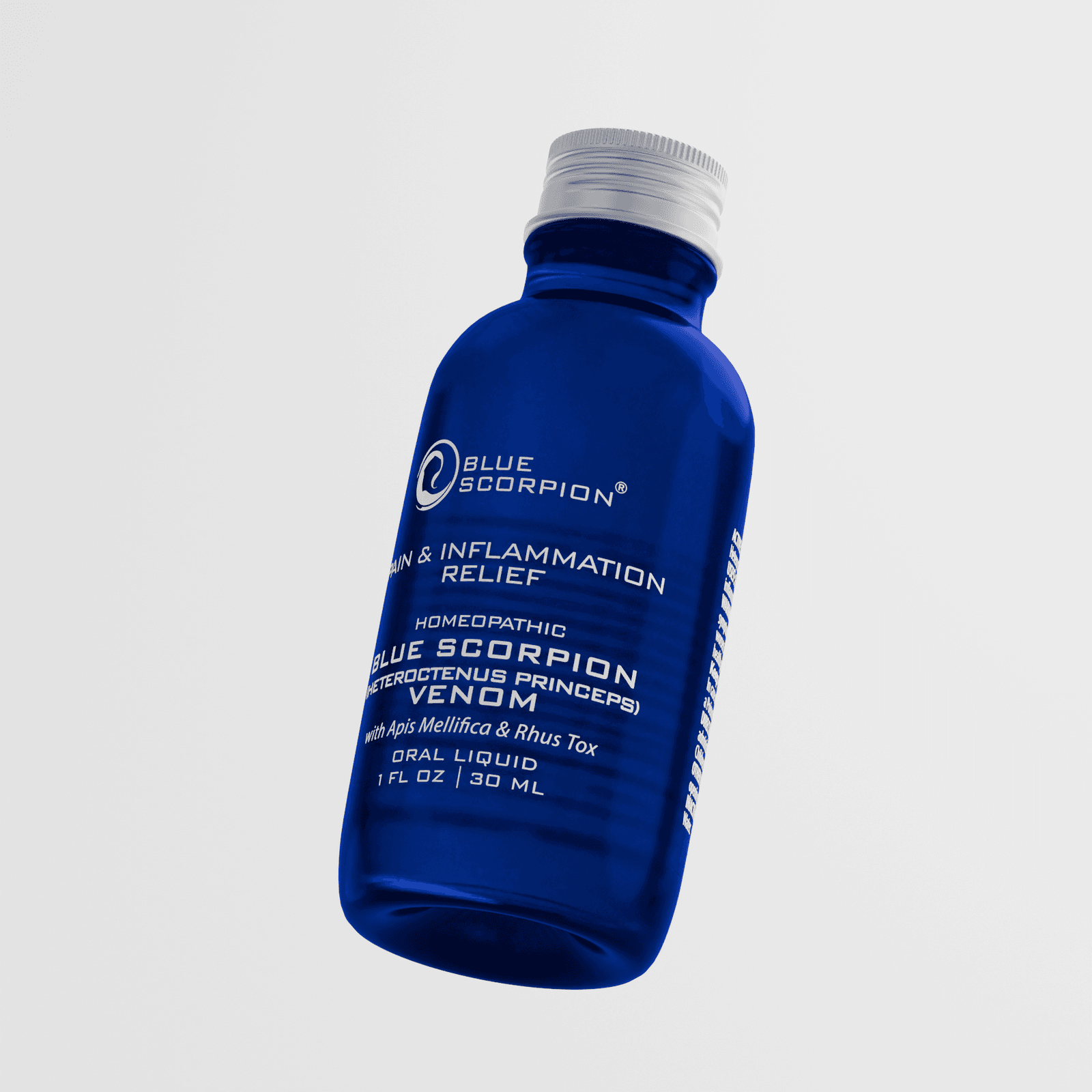
Blue Scorpion is one example of a combination homeopathic product: an alcohol-free formula with an FDA NDC listing, made with Heteroctenus Princeps, Apis Mellifica, and Rhus Toxicodendron.*
*These statements and claims are based on traditional homeopathic practice, not accepted medical evidence, and are not FDA evaluated. This product is intended for the temporary relief of pain, inflammation, and symptoms. Individual results may vary.
In this guide, you'll discover how homeopathic medicine for pain and inflammation is actually chosen, which remedy profiles match which symptom patterns, where combination formulas fit in, and when pain needs a doctor instead. No filler. Just what you need to know.
Match the Symptom Pattern Before Choosing Support
In homeopathy, the location of your pain matters less than the pattern around it. Two people with knee pain may need two different remedies, because one feels better walking and the other feels worse.
That is the part most people skip. They pick something labeled for joints, use it, and see little change. A more useful approach is to describe your discomfort the way a practitioner would, in plain detail.
Before choosing anything, note these details:
Sensation: throbbing, burning, stinging, bruised, sharp, or dull
Onset: sudden after injury or trauma, or slow and creeping
Better with: rest, motion, pressure, cold, or heat
Worse with: first movement, damp weather, overexertion, or touch
Extras: redness, heat, swelling, fatigue, or numbness
Acute inflammation shows up fast and loud. Chronic inflammation is quieter and more stubborn, and it often needs lifestyle work alongside any remedy.
Sudden Heat, Redness, and Throbbing
This pattern comes on quickly. The area looks red, feels hot to the touch, and pounds with your pulse. Even light pressure feels like too much.
You see it after a hard fall, a flared bursa, or an inflammatory response that spikes overnight. Fast onset plus visible heat is the marker here.
Bruised Soreness After Trauma or Overexertion
Here the pain feels like a deep bruise. The muscle aches when you press it, and the whole limb can feel beaten up after a heavy session or a minor injury.
Bruising, strains, and post-impact muscle soreness fall in this group. The soreness usually peaks a day or two after the event.
Stiff Joints and Pain With Movement
Stiffness that is worst on your first few steps, then eases as you keep moving, is its own pattern. Cold, damp weather often makes it worse.
Compare that to pain that gets sharply worse with any motion and better when you hold still. Those two responses point in opposite directions.
Burning, Stinging, or Nerve-Like Pain
Nerve pain reads differently. It shoots, tingles, burns, or feels electric, and it can travel down a leg or arm as with sciatica or neuralgia.
Stinging pain with puffy swelling is another distinct pattern, closer to what happens after an insect bite. Naming your pattern is what makes the next step, choosing among specific remedy profiles, possible.
Common Homeopathic Remedy Profiles and Their Limits
Homeopathic remedies are described in materia medica as symptom pictures, not as drugs for named diseases. Each profile below is traditional use, not a promise about your condition.
Potencies like 6c and 30c come from serial dilution and succussion, the repeated shaking step in homeopathic preparation. Higher numbers mean more dilution, not a stronger drug dose.
Arnica Montana for Post-Impact Soreness
Arnica montana is the classic profile for bruised, beaten-up soreness after minor trauma or overexertion. Think tender muscles, bruising, and stiffness following a fall or a long training block.
It is widely used in sports settings for that reason. It is not a match for hot, red, throbbing swelling.
Rhus Toxicodendron and Bryonia Alba for Contrasting Motion Patterns
Rhus toxicodendron fits stiffness that eases with gentle motion and returns after rest, often worse in cold, damp air. Rheumatic pain and stiff backs are common reference points.
Bryonia alba is the mirror image. It suits sharp pain that worsens with any movement and improves with rest and firm pressure.
Belladonna and Apis Mellifica for Hot or Puffy Presentations
Belladonna is traditionally used for sudden, throbbing inflammation where the skin is red, hot, and sensitive to touch. Onset is fast.
Apis mellifica matches puffy, water-filled swelling with stinging or burning pain, the kind seen with bee stings, hives, and edema that feels better with cold.
Ruta, Hypericum, Ledum, and Other Symptom-Specific Profiles
Ruta graveolens is associated with tendon and ligament strain, including tendonitis and repetitive overuse. Hypericum perforatum is referenced for sharp, shooting nerve pain in nerve-rich areas.
Ledum palustre is linked to puncture wounds, insect bites, gout-type joint pain, and discomfort relieved by cold. Causticum, sulphur, nux vomica, magnesia phosphorica, and hepar sulphuris carry their own narrower pictures.
The limit is real: single remedies demand precise matching, and most people guess. That is why many turn to formulas that combine complementary ingredients in one bottle.
Where Blue Scorpion Fits as a Combination Formula
Combination homeopathic products take a different approach from single-remedy dosing. Instead of asking you to match one profile perfectly, they pair ingredients that cover related patterns of pain, swelling, and stiffness.*
*These statements are based only on traditional homeopathic theory from the 1700s, not accepted by most modern medical experts. There is no scientific evidence that this product works.
That format suits people building a daily routine rather than treating one incident. It also fits an integrative approach, where natural support sits alongside physical therapy and medical care.
Topical Homeopathic Options Are a Separate Category
Homeopathic pain relief creams are also available on the market, applied over a sore spot for a localized ache, a stiff neck, or a knee that complains after stairs. That is a real, distinct product category with its own use case.
Blue Scorpion itself is not one of these. It is an oral liquid, taken under the tongue rather than applied to the skin, discussed in more detail below. This joint pain relief guide covers general daily habits that pair with either format.
Ingredients, Alcohol-Free Format, and FDA NDC Context
The formula discussed here is an oral liquid made with Heteroctenus Princeps, a highly diluted Caribbean blue scorpion venom, plus Apis Mellifica and Rhus Toxicodendron. It is traditionally used for the temporary relief of minor joint pain, muscle soreness, and swelling.*
*These statements are based only on traditional homeopathic theory from the 1700s, not accepted by most modern medical experts. There is no scientific evidence that this product works.
It is non-opioid and alcohol-free, which matters if you avoid stimulants or drug-tested competition risks. Its FDA NDC listing means the product is registered and its ingredients are documented in FDA's listing system.
Using Product Claims Responsibly
An NDC listing is a credibility signal about registration, not FDA approval of effectiveness. Read it that way, and you will read every label more clearly. This FDA-Listed vs. FDA-Approved guide covers this distinction in full.
No homeopathic product treats or cures arthritis, rheumatoid arthritis, or joint inflammation, and none replaces your doctor's plan. What it can offer is a traditional-use option alongside the daily habits that shape inflammation, not a mechanism of action backed by clinical evidence.*
**These statements are based only on traditional homeopathic theory from the 1700s, not accepted by most modern medical experts. There is no scientific evidence that this product works. This product is not intended to diagnose, treat, cure, or prevent any disease.
Support Recovery Beyond Any Remedy
Any remedy works better when the rest of your routine is not fighting it. Inflammation responds to load, sleep, food, and stress, and those levers are free.
Chronic stress keeps the immune system on alert. Long-term, that low-grade state is linked to obesity, cardiovascular disease, digestive issues like ulcerative colitis, and autoimmune diseases such as lupus.
Rest, Gradual Movement, and Load Management
Full rest helps for a day or two after an acute injury. After that, gentle movement usually beats stillness, because joints need circulation to feel better.
Cut your training volume before you cut movement entirely. Walking, easy cycling, and range-of-motion work keep tissue fed while it settles. Our muscle soreness recovery guide covers this in more depth.
Cold, Heat, and Mobility Choices
Cold suits fresh, hot, swollen areas in the first 48 hours. Heat suits stiff, achy tissue that loosens as you move.
Follow what your body prefers. If cold feels good on a puffy joint, that preference is also a clue for remedy matching.
Nutrition, Sleep, and Stress Management
Aim for seven to nine hours of sleep, since most tissue repair happens overnight. Skimping raises pain sensitivity the next day.
Eat more fish, olive oil, leafy greens, berries, and spices like turmeric and ginger. Cut back on ultra-processed food and heavy alcohol, and keep hydration steady through the day.
Fatigue that never lifts, even with these basics in place, is a signal worth taking seriously.
When Pain or Swelling Needs Medical Evaluation
Some symptoms are not candidates for self-care of any kind. Knowing the line protects you and keeps natural support in its proper role.
Urgent Signs After an Injury
Get evaluated the same day for an obvious deformity, an inability to bear weight, or a joint that gives out. Numbness, tingling, or a limb that turns pale or cold also needs prompt care.
Rapid swelling right after trauma can point to a fracture or a significant ligament injury.
Possible Infection or Serious Inflammation
Fever, especially a high fever, alongside a hot swollen joint calls for a doctor now. Red streaking skin, drainage, or an abscess suggests infection.
The same applies to a severe sore throat, tonsillitis, or an earache that worsens. Infection needs diagnosis, not remedy matching.
Persistent or Recurring Symptoms
Pain that lasts weeks, keeps returning, or spreads deserves a full workup. Once serious causes are ruled out, a qualified homeopath can take your totality of symptoms and consider a constitutional remedy at a potency such as 30c or 200c.
Classical homeopathy frames this as supporting the vital force, the body's own self-healing drive. Either way, pairing professional input with your daily routine gives you a plan you can hold on to.
Frequently Asked Questions
What Homeopathic Options Are Commonly Used for Knee Pain and Stiffness?
Choice depends on the pattern, not the joint. Stiffness that eases with movement points toward Rhus toxicodendron, while pain that worsens with any motion fits Bryonia alba, and hot puffy swelling fits Apis mellifica. These are traditional-use profiles based on homeopathic theory, not clinical evidence.
What Remedies Are Used for Muscle Pain, Joint Discomfort, and Swelling?
Arnica montana is the common reference for bruised muscle soreness, Ruta graveolens for tendon and ligament strain, and Apis mellifica for puffy swelling. Combination formulas pair several of these in one product.
Is Arnica Montana Used for Pain and Inflammation After an Injury?
Yes, arnica is traditionally used for soreness, bruising, and stiffness following minor trauma or heavy exertion. It is not appropriate for open wounds or as a substitute for care after a serious injury.
Can Rhus Toxicodendron Help With Pain That Feels Worse After Rest and Better With Movement?
That is its classic pattern: stiffness on first motion that loosens as you keep going, often worse in cold, damp weather. In homeopathic dilution, it bears no resemblance to the raw plant.
Is Apis Mellifica Used for Swelling, Redness, and Burning Discomfort?
Apis mellifica is traditionally associated with stinging or burning pain and puffy, fluid-filled swelling that feels better with cold. Sudden severe swelling with breathing trouble is an emergency and needs immediate care.
Are Homeopathic Pain-Relief Products Non-Opioid and Alcohol-Free?
Homeopathic remedies are non-opioid, but many liquids use alcohol as a carrier, so check the label. Alcohol-free formats matter if you avoid alcohol for personal, medical, or drug-tested sport reasons.
*Traditional-use statements referenced above are based only on traditional homeopathic theory from the 1700s, not accepted by most modern medical experts. There is no scientific evidence that these products work.
Relief That Matches What You Are Actually Feeling
The useful takeaway is simple: describe your pain precisely, then choose support that fits the pattern. Sensation, onset, and what makes it better or worse tell you more than the name of the joint ever will.
Pair that with steady sleep, sensible load, and food that works with your body instead of against it. Traditional-use support performs better inside a routine than it does as a one-time fix.
If you want an alcohol-free option with a documented ingredient list, explore Blue Scorpion's FDA NDC-listed homeopathic formula made with Heteroctenus Princeps, Apis Mellifica, and Rhus Toxicodendron, traditionally used for temporary relief of minor joint pain, muscle soreness, and swelling.*
*These statements are based only on traditional homeopathic theory from the 1700s, not accepted by most modern medical experts. There is no scientific evidence that this product works.
Bundle and save on the formula.
This product is not intended to diagnose, treat, cure, or prevent any disease. Not evaluated by the FDA.