

Your knee catches on the first step down the stairs. Your knuckles feel thick and slow when you grip a coffee mug. Maybe an elbow burns after yard work, or your feet ache before you even stand up. That kind of joint discomfort does not wait politely, and neither do you. When a flare-up hits, waiting days for something to kick in feels unacceptable.
That impatience is fair, and it is worth being precise about what actually works fast versus what just claims to. Some tools genuinely act within minutes, like a cold pack on a hot joint or a topical rubbed into a sore knuckle.
Others, like structural supplements or daily oral formulas, work on a slower timeline and are worth using for different reasons. For a general overview of what causes joint pain and when it needs medical attention, see Mayo Clinic's guide on when to see a doctor for joint pain.
Keep reading to learn how to read your own symptoms, pick between topical and oral formats, compare label ingredients honestly, and use a topical safely alongside daily movement. No filler. Just what you need to know.
Start With the Source and Severity of Discomfort
Fast-acting joint pain relief works best when you know what you are actually treating. A joint that is sore from overuse behaves differently than a joint that is swollen, hot, or unstable.
Joint discomfort usually comes from one of three places: mechanical strain, a temporary inflammatory response, or wear in the cartilage and surrounding tissue. Each of those responds to different tools. Strain often eases with rest and topical care. Inflammation-driven stiffness may need a broader approach that supports a healthy inflammatory response over time.
Signs That Call for Medical Evaluation
Some symptoms are not a job for the medicine cabinet. Get checked by a clinician if you notice any of the following:
A joint that is red, hot, and visibly swollen with fever
Pain after a fall, twist, or impact that limits weight-bearing
A joint that locks, buckles, or gives out under normal use
Numbness, tingling, or weakness spreading down a limb
Discomfort that keeps worsening over several weeks despite rest
Nothing on that list is a reason to panic. It is a reason to get an accurate picture before you spend money on the wrong product.
Everyday Strain, Stiffness, and Recovery Needs
Most joint aches are ordinary. Overused joints in the hands, knees, elbows, and feet stiffen after repetitive work, long shifts, or a hard training block. Morning tightness that loosens within twenty or thirty minutes usually points to soft tissue and fluid movement, not damage.
For that everyday category, your goal is joint comfort and steady joint function, not a cure. And the format you choose changes how fast you feel a difference.
Match the Relief Format to the Moment
Topicals act where you rub them. Oral formulas act system-wide. Choosing between them depends on whether your discomfort is in one spot or spread across several joints.
Fast-acting relief is partly a delivery question. A foam or cream reaches a shallow joint like a knuckle or knee quickly. A softgel has to be digested and absorbed first, which takes longer but reaches every joint at once. That timing difference matters more than any single ingredient, so it is worth knowing which category any product you are considering actually falls into before you expect a same-day result.
Topical Application for Targeted Areas
Targeted relief makes sense when you can point to the problem. Foams, roll-ons, and creams absorb into the skin over a sore knee, wrist, or heel, and many people feel a change within minutes of massaging one in.
Topicals also fit awkward timing. You can use one before a shift, after a workout, or at 11 p.m. without worrying about stacking another dose of something oral. They wash off, and you can reapply on a limited area as directed.
Oral Supplements for Ongoing Support
A nutritional supplement plays a longer game. Softgels and capsules, often sold in bottles of 60 softgels as a 30-day supply, are built for daily consistency rather than a single dramatic moment.
Some oral joint formulas are studied specifically for quicker onset of comfort. Others are structural, meant to support cartilage, muscle, and joint health over months. The label tells you which one you are holding, if you know what to look for.
Compare Ingredients and Label Details
Ingredient lists separate real formulas from repackaged filler. Look for named extracts, standardized amounts, and a clear serving size instead of vague "proprietary blend" language.
Two families of ingredients dominate the joint aisle. One targets the inflammatory side of discomfort. The other targets the structures inside the joint. Knowing which is which keeps your expectations realistic.
Turmeric, Boswellia, and Black Sesame Extracts
Turmeric supplies curcumin and related curcuminoids, and good labels list total curcuminoids as a percentage. Boswellia serrata, also sold as Indian frankincense or olibanum, is often standardized to AKBA content.
Black sesame extract shows up in some newer blends alongside those two. Clinical work on combined turmeric, Boswellia, and sesame extracts has looked at faster comfort in muscles, bones, and joints. Check for non-GMO sourcing and simple carriers like glycerin and purified water.
Collagen, Glucosamine, and Chondroitin
These three are structural players. Glucosamine and chondroitin are cartilage building blocks, and collagen supports connective tissue. Evidence is mixed but reasonable for long-term joint health.
Expect weeks, not hours, from this group. That gap between quick comfort and slow rebuilding is exactly why many people run a topical alongside their daily capsule.
Use a Topical Formula Safely and Consistently
Topicals are low-risk, not no-risk. Read the ingredient panel, patch test on a small area, and keep application away from broken skin, eyes, and mucous membranes.
Natural ingredients still interact with sensitive skin. Aloe barbadensis leaf juice and aloe barbadensis leaf extract are common soothing bases. Allantoin helps condition the skin so repeat use is less irritating.
What to Check Before Applying a Foam or Roll-On
Scan for these details before your first application:
Skin conditioners such as allantoin and tocopheryl acetate, which support tolerance with daily use
Base ingredients like aloe barbadensis leaf extract, listed high on the panel
Botanicals including vitex agnus-castus extract, which some formulas include for comfort support
Additives such as colloidal silver, which you may want to ask your provider about
Directions and frequency limits, since more product does not mean faster joint relief
If your skin reddens, stings, or itches beyond mild warmth, stop and wash the area.
Support Recovery With Smart Daily Movement
Movement is the multiplier no product replaces. Gentle range-of-motion work keeps joint fluid circulating, which is part of why mobility improves after a short walk.
Aim for low-impact volume: walking, cycling, pool work, and slow, controlled stretching. Load the joint enough to stay strong, not enough to inflame it again. Ten focused minutes twice a day beats one punishing session. This joint pain relief guide covers this kind of daily mobility work in more depth.
Habits and topicals cover a lot of ground. What they do not answer is how to tell a credible product from a marketing story.
What Credibility Looks Like on a Label
Credibility comes down to two things: what the label discloses, and whether the product is registered with a regulator. Both are easy to verify before you buy.
Homeopathic formulas are one category on the joint pain shelf, and the better ones are transparent about every active ingredient and its dilution.
Why FDA NDC Listing and Clear Labels Matter
An FDA NDC listing means a product is registered in the National Drug Code Directory with its labeling and ingredients on file. It is not an endorsement of results, and no honest brand should claim otherwise. See this FDA-Listed vs. FDA-Approved guide if you want the fuller explanation.
What it does give you is a traceable record: manufacturer, product name, active ingredients, and dosage form. Combined with a clear, alcohol-free formulation, that is a reasonable bar to hold every product to.
Where Blue Scorpion Fits, and What It Is
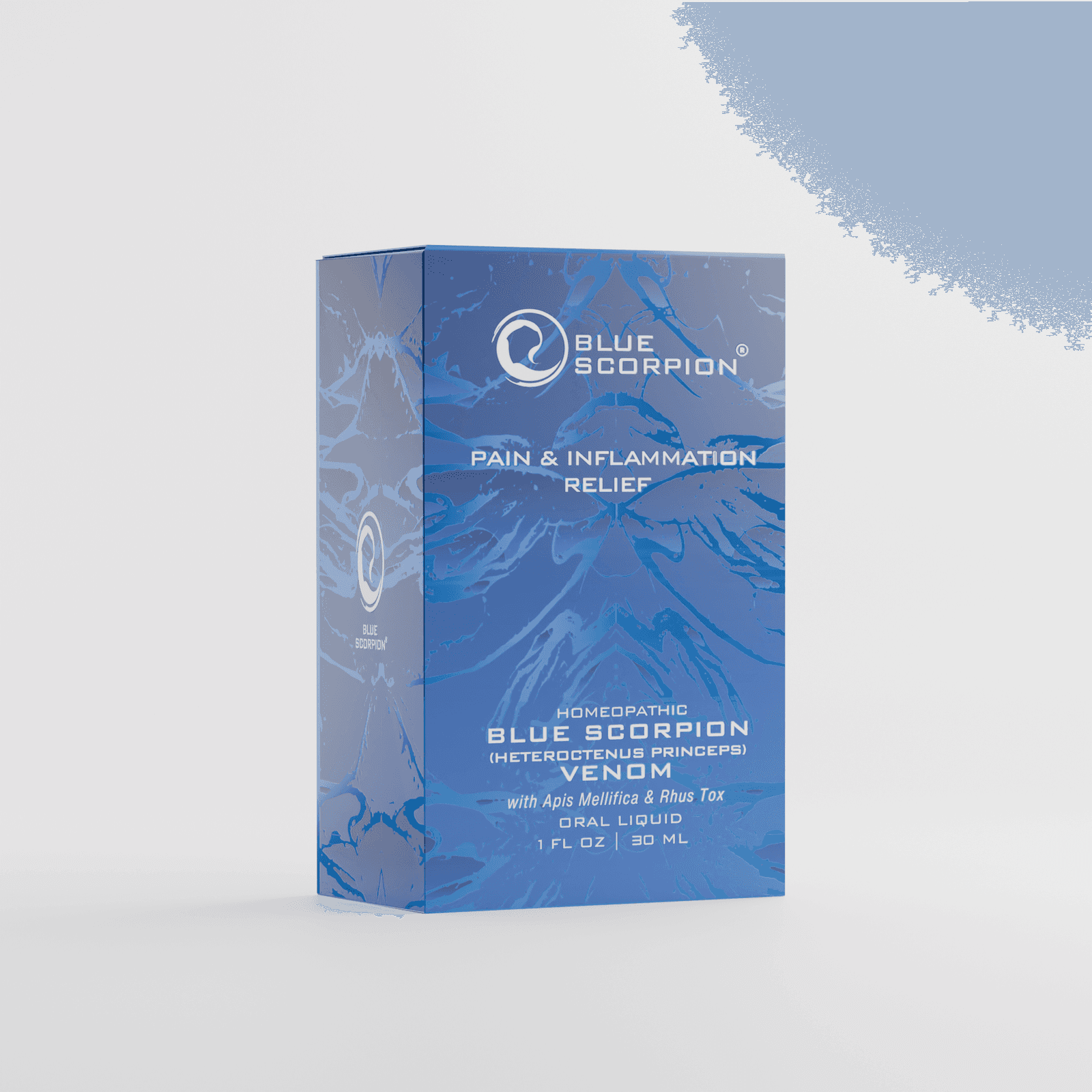
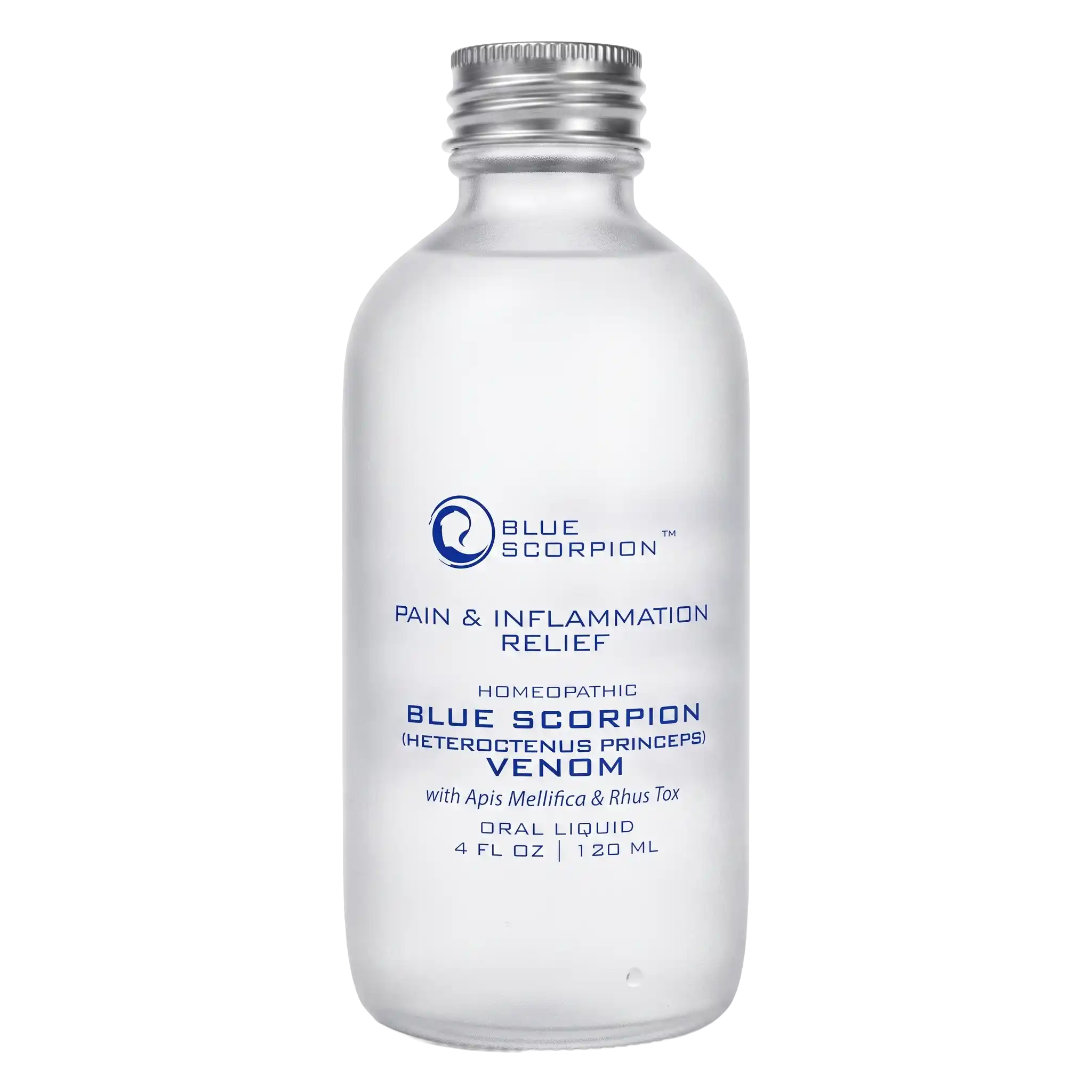
Blue Scorpion is an alcohol-free, non-opioid, FDA NDC-listed oral formula, taken under the tongue rather than applied topically. The formula pairs three named actives: Heteroctenus Princeps, Apis Mellifica, and Rhus Toxicodendron, each traditionally used in homeopathy for the temporary relief of joint discomfort, swelling, and the stiffness that shows up after rest or overuse.*
*These statements are based only on traditional homeopathic theory from the 1700s, not accepted by most modern medical experts. There is no scientific evidence that this product works.
Like the oral supplements described earlier, it is meant for daily consistency rather than a single fast-acting moment. Bundles bring the per-bottle cost down and often include free shipping, so a consistent routine can cost less than restocking one bottle at a time. Our homeopathic pain relief guide covers how each ingredient is traditionally used in more depth.
Frequently Asked Questions
What Helps With Joint Pain Immediately?
Cold on a hot, swollen joint and heat on a stiff one both work within minutes. A topical foam or cream over the sore area is the fastest targeted option, since it does not need to be digested first.
Which Anti-Inflammatory Medicine Works Best for Joint Pain and Stiffness?
There is no single best answer, because the right choice depends on your health history and what else you take. Talk with your provider, especially if you have stomach, kidney, liver, or blood pressure concerns.
What Is the Strongest Over-the-Counter Pain Reliever for Knee Pain?
"Strongest" is less useful than "appropriate for you." Topical options often deliver comfort to a shallow joint like the knee with less system-wide exposure than oral products, which is why many clinicians suggest trying them first.
Which Natural Remedies May Help Reduce Joint Pain and Inflammation?
Standardized turmeric and Boswellia serrata extracts, omega-3 fats, and consistent low-impact movement all have research support for joint comfort. Homeopathic formulas using Apis Mellifica and Rhus Toxicodendron are traditionally used for swelling and stiffness as well, based on traditional homeopathic theory rather than clinical evidence.
What Pain Reliever Works Best for Arthritis in the Hands?
Hands respond well to topicals because the joints sit close to the skin surface. Many people combine a topical with warmth, gentle finger mobility work, and grip-friendly tools that reduce daily strain.
Do Joint Supplements Provide Meaningful Relief for Stiffness and Discomfort?
Some do, but the timeline is honest work. Structural ingredients like glucosamine, chondroitin, and collagen usually need six to twelve weeks, while certain turmeric and Boswellia blends have been studied for quicker comfort.
Getting Back to Easy Movement
The practical takeaway is simple: identify what is driving your discomfort, then match the format to the moment. Topicals for one loud joint. Daily oral support for the slow, structural work. Movement every day, because nothing else replaces it.
If a daily homeopathic option fits into that plan, Blue Scorpion's FDA NDC-listed, alcohol-free formula with Heteroctenus Princeps, Apis Mellifica, and Rhus Toxicodendron is traditionally used for temporary relief of minor joint discomfort.*
*These statements are based only on traditional homeopathic theory from the 1700s, not accepted by most modern medical experts. There is no scientific evidence that this product works.
Bundle and save on the daily routine.
This product is not intended to diagnose, treat, cure, or prevent any disease. Not evaluated by the FDA.