

If you have searched "do you have to cycle BPC-157," you already know that synthetic peptide use comes with a lot of structure. Cycling means planning on-periods, off-periods, and dose schedules with care. It is not as simple as taking something once a day and forgetting about it.
The reason people ask about cycling is practical: they want to know how long to use a compound, when to stop, and whether taking breaks is actually necessary. For BPC-157 specifically, the answer depends on the goal, the dose, and a set of precautionary habits common in peptide research communities.
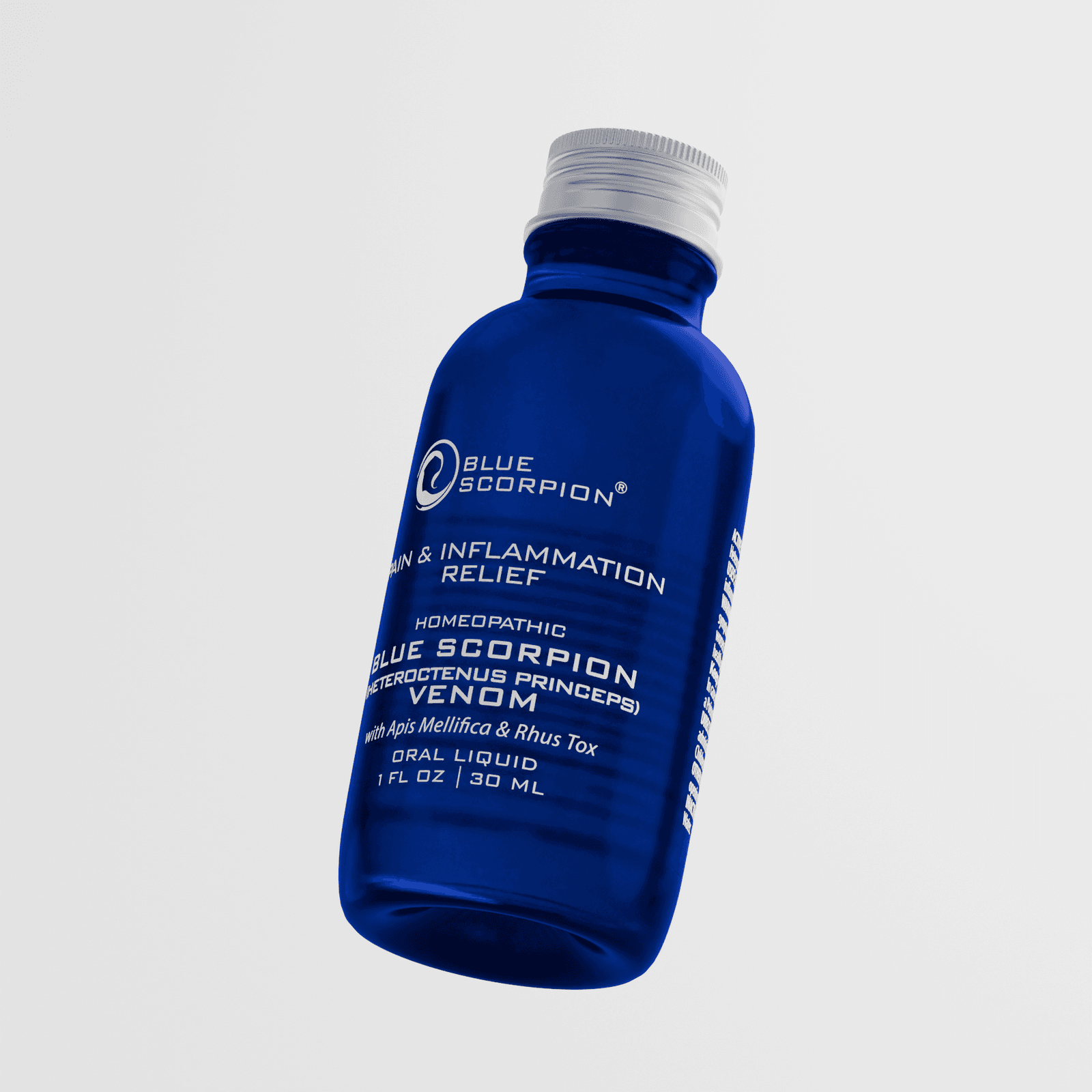
This article explains what cycling means, why it exists, and how a daily homeopathic routine differs in terms of structure and simplicity. If you are looking for a straightforward daily option with no on/off schedule to manage, Blue Scorpion Pain and Inflammation Relief is a homeopathic OTC formula worth exploring.
What Cycling Means in Peptide Routines
Cycling refers to using a compound for a set period, then stopping for a defined rest period before starting again. The two core elements are tracking when you are "on" and planning when you are "off."
On-and-Off Periods
A typical BPC-157 cycle runs somewhere between four and eight weeks on, followed by a two-to-four-week break. Some protocols for chronic concerns extend the on-period to twelve weeks. The off-period is not just downtime. It serves as a window to see whether improvements hold without the compound present.
Here is a general overview of common cycle structures used in peptide research communities:
Goal | Typical On-Period | Typical Off-Period |
Acute injury support | 4 to 8 weeks | 4 weeks minimum |
Chronic discomfort | 8 to 12 weeks | 4 to 8 weeks |
General maintenance | 5 days on, 2 days off | Monthly break every 3 to 4 months |
These are general frameworks used in research settings. They are not medical prescriptions and vary widely depending on the source.
Why Structure Adds Complexity
Beyond the on/off structure, using a research compound involves layers most people don't anticipate going in: tracking timing, monitoring how you're responding, and managing supply. That planning burden is a big part of why people search out simpler alternatives in the first place.
Why People Use Structured Schedules
Cycling schedules exist for reasons rooted in biology, practicality, and simple caution. Two of the biggest drivers are concern about tolerance and the real-world limits of sourcing.
Tolerance and Side Effect Concerns
The principle behind cycling most compounds is homeostasis. Your body tends to push back against anything that keeps pushing it in one direction. Receptor sensitivity can shift, and effects may seem to weaken over time. Cycling allows the body to reset before the next round begins.
BPC-157 appears to behave differently from many compounds in this regard. Research community discussions suggest it may not cause classic receptor downregulation in the same way hormones or stimulants do.
Even so, many researchers cycle it as a precautionary measure because the long-term data from extended continuous use in humans is limited. Caution is considered sound practice when that data is absent.
Supply and Sourcing Limits
There is also a practical side to cycling. Peptides like BPC-157 are sold as research chemicals, typically labeled "not for human use." They are not OTC medicines. Sourcing is inconsistent, purity is not guaranteed by any regulatory body, and supply availability can vary. Running a cycle rather than continuous use helps stretch supply and reduces the total amount needed over time.
What Makes These Plans Hard to Follow
Even when someone is motivated to follow a cycling protocol carefully, day-to-day execution creates real challenges.
Keeping Up With Breaks
The off-period is easy to skip. Once you feel better or see results, stopping voluntarily can feel counterproductive. Many people extend their on-period past the planned endpoint without fully assessing whether the underlying issue has resolved. This makes it harder to know whether the compound is still doing something useful or whether results would hold on their own.
Tracking also requires discipline across multiple variables at once:
Start date and end date of each cycle
Current week within the cycle
Whether the off-period was honored in full
Any symptom changes during the off-period
That level of tracking is manageable for some people and genuinely burdensome for others.
Staying Consistent Day to Day
Injections require equipment, sterile technique, and a routine that is harder to maintain while traveling or in a busy schedule. Reconstituting a peptide vial means measuring the correct volume of bacteriostatic water, drawing accurate volumes with an insulin syringe, and storing the reconstituted solution at the correct temperature.
One mistake in that chain affects the entire batch. For people who want a simple daily wellness habit, this level of process creates friction.
How a Daily Homeopathic Routine Differs
A homeopathic OTC medicine like Blue Scorpion operates on a completely different model. There are no on/off cycles to plan, no reconstitution steps, and no injections. The routine is simply taken as directed, each day, consistently.
Taken as Directed Each Day
Blue Scorpion Pain and Inflammation Relief is used daily with a fixed regimen: 2 ml in the morning and 2 ml in the evening for adults, for a total of 4 ml per day. You do not increase the dose over time, plan breaks, or adjust based on cycle length.
The schedule stays the same. This is a routine distinction, not a claim about biological activity. The product is a highly diluted homeopathic formula, not a peptide therapy.
The active ingredients are:
Heteroctenus Princeps venom 3X
Apis Mellifica 6X
Rhus Toxicodendron 6X
Each is present in a highly diluted homeopathic form, in accordance with the standards of the Homeopathic Pharmacopeia of the United States. Caribbean Blue Scorpion venom is the source material that undergoes serial dilution to homeopathic potency before becoming the finished product; not a source of active peptides.
Sublingual Use and Routine Simplicity
Blue Scorpion is taken sublingually, meaning under the tongue, held for 15 seconds before swallowing. No needles. No reconstitution. No equipment. You shake the bottle, measure 2 ml, and take it. That is the full process.
The formula is non-opioid and alcohol-free. For someone whose main barrier is the complexity of an injection-based routine, this format removes that friction entirely.
Where Blue Scorpion Fits in This Comparison
Blue Scorpion is not a peptide therapy and does not position itself as one. It is an OTC homeopathic medicine. The comparison to BPC-157 cycling protocols is a contrast in routine structure, not a comparison of effects or outcomes.
Highly Diluted Formula, Not Peptide Therapy
The formula contains Heteroctenus Princeps venom 3X, Apis Mellifica 6X, and Rhus Toxicodendron 6X. These are homeopathic dilutions. The product does not deliver peptides at therapeutic concentrations.
It is a homeopathic preparation traditionally used for the temporary relief of minor aches and discomfort.* Calling it a peptide substitute would be inaccurate, and the brand does not make that claim.
FDA NDC Listed and Alcohol-Free
Blue Scorpion is listed with the FDA under NDC 83627-901-01 and NDC 83627-901-02. It is manufactured in a cGMP facility and tested against 400-plus banned substances in ISO 17025-accredited, WADA-based laboratories.
BPC-157 carries none of those credentials. It is sold as a research chemical with no NDC listing, no regulatory oversight for human use, and no standardized manufacturing requirement. The comparison on trust, sourcing accountability, and regulatory status is significant. The comparison on effects is not one this article makes.
Choosing a Simpler Long-Term Routine
If the complexity of cycling a synthetic compound is what pushed you to search for this topic, it is worth being clear about what "simpler" really looks like.
Questions to Ask Before You Buy
Before committing to any product, ask these questions:
Is it listed with the FDA under an NDC number?
Is it manufactured in a cGMP facility?
Has it been tested by an independent, accredited lab?
Does it require a cycling schedule, special storage, or injection equipment?
Is it sold as "not for human use" or as an OTC medicine?
The answers separate products built on transparency from those that rely on buyer research in a gray market. A simpler routine means less tracking, fewer steps, and a product you can take the same way every day without having to plan your next break.
Frequently Asked Questions
Why Do Some Compounds Need Cycling and Others Don't?
Cycling exists mainly for compounds where the body's response may change with continuous use, or where supply and sourcing are limited enough that stretching usage matters. Products with a fixed, unchanging daily direction — like most OTC medicines, including homeopathic formulas — don't carry the same structural requirement, since there's no on/off protocol built into their intended use.
What Does "Not for Human Use" Actually Mean on a Label?
That label means the product hasn't been cleared for human consumption by any regulatory authority, and the manufacturer isn't required to follow consumer drug manufacturing, purity, or testing standards. It's a legal and safety signal, not just a formality — it means the usual accountability structures for an OTC medicine don't apply.
What Should I Check Before Trying Any New Daily Wellness Product?
A good starting checklist: does it have an FDA NDC listing, is it made in a cGMP facility, has it been tested by an independent accredited lab, and does the label clearly state what it is and how it's meant to be used? Products that answer yes to these are generally easier to evaluate than ones sold without any of that documentation.
Why Do Some Routines Require Tracking Breaks While Others Don't?
Tracking on/off periods is a response to uncertainty — either about how a compound behaves with long-term use, or about how much supply you have. A product taken the same fixed way every day, without dose adjustments over time, doesn't require that kind of tracking because there's no schedule variable to manage.
Is a Simpler Daily Routine Automatically Better?
Simplicity is about fit, not superiority — it's a question of how much planning and tracking you're willing to take on, not a claim that one type of product works better than another. The right format depends on your goals, your tolerance for complexity, and what you're comfortable managing day-to-day.
What's the Difference Between an OTC Medicine and a Research Chemical, in Terms of Daily Use?
An OTC medicine is intended for human use, follows FDA labeling and manufacturing rules, and is taken as directed on its label with no special handling. A research chemical is designed to meet none of those requirements, which is part of why routines built around research chemicals tend to involve more structure, tracking, and caution.
No Cycling, No Breaks
Whatever pushed you to search this topic, a simple daily routine is worth knowing exists. You can take Blue Scorpion Pain & Inflammation Relief the same way, every day: no schedule to plan, no breaks to track. Try it today or reach out to our team if you have questions about the product.
These statements are based on traditional homeopathic practice, which is not accepted by most modern medical experts, and have not been evaluated by the Food and Drug Administration. There is no scientific evidence that this product works. This product is intended for the temporary relief of symptoms. Individual results may vary.