

If you are searching for a BPC-157 alternative, the real question underlying that search is usually: is it legal, has it been tested, and is it safe to put in your body? BPC-157 and similar compounds are sold online under labels that say "not for human use" or "research use only," with no consistent oversight and no guaranteed purity. That gap in accountability matters, especially for anyone trying to make a careful, informed choice.
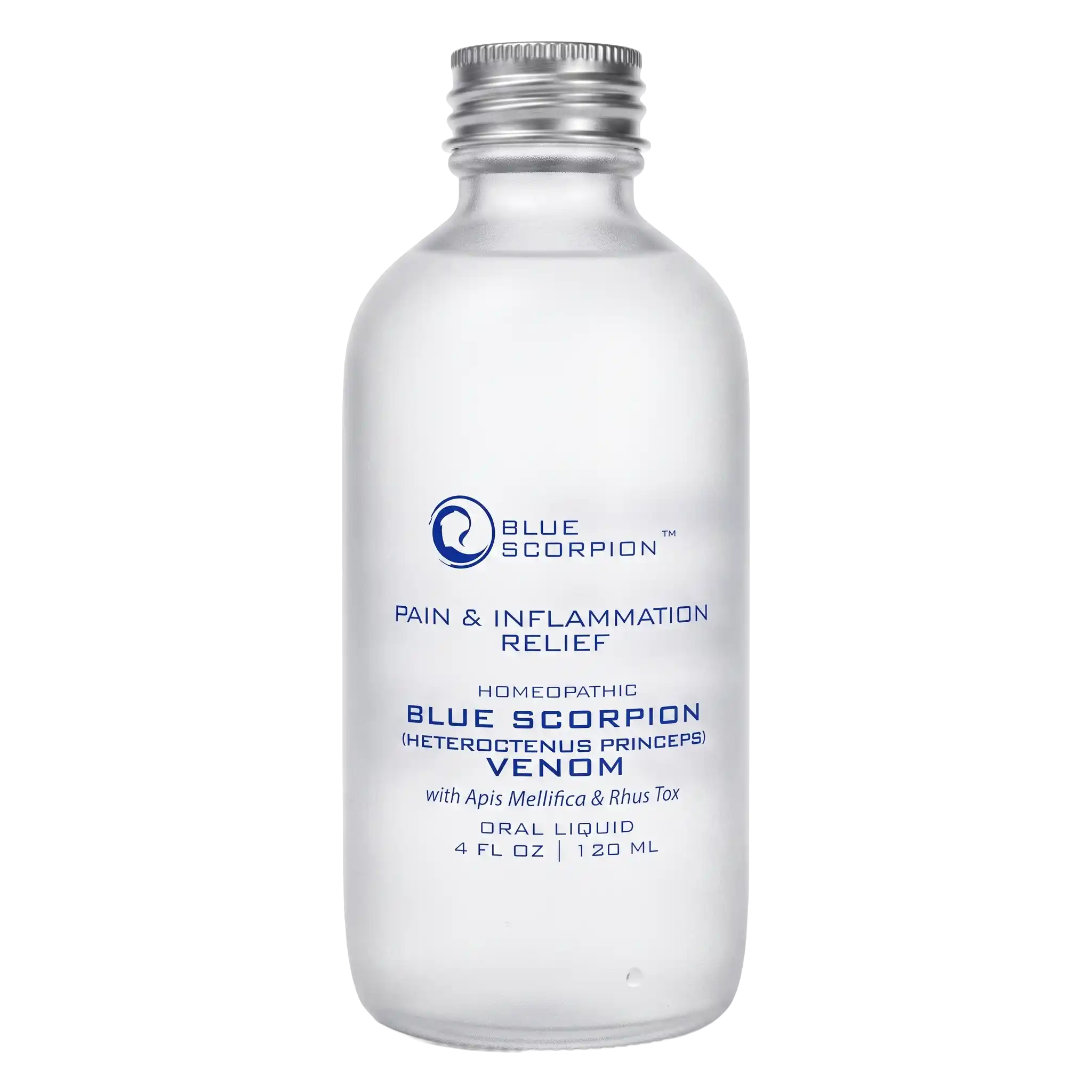
Blue Scorpion Pain and Inflammation Relief is a different kind of product worth knowing about in this conversation; not as a substitute for what BPC-157 is used for, but as an example of what a fully regulated, transparently tested option looks like.
Here's what you'll learn in this guide:
what "research use only" labels actually mean and why they exist
the sourcing and purity gray areas that come with buying research peptides online
how to read the regulatory markers that separate a fully accountable product from an unregistered one —FDA NDC listing, cGMP manufacturing, and ISO 17025 lab testing
a simple checklist you can use to vet any product in this category before you buy.
What Research Chemical Labels Really Mean
Research chemical labels are not just marketing language. They carry specific legal meaning that affects every buyer who encounters them. The label "not for human use" or "research use only" signals that the compound has not been cleared for human consumption by any regulatory authority.
Why "Not for Human Use" Matters
When a product carries a "research use only" label, it means the manufacturer is not required to follow consumer drug manufacturing standards. There is no obligation to verify purity, confirm accurate dosing, or test for contaminants. A buyer has no way to confirm what is actually in the vial without independent testing. BPC-157, TB-500, and similar compounds are sold this way across most online channels, meaning buyers absorb all the risk of sourcing, purity, and legality themselves.
Common Sourcing and Purity Gray Areas
Research peptides often pass through multiple hands before reaching a buyer, and each step adds uncertainty. Batch quality varies across suppliers, and there is no standardized certificate-of-analysis format or enforcement mechanism.
Some products test clean; others contain incorrect concentrations or undisclosed compounds. Without a regulatory framework requiring consistent manufacturing, buyers are essentially trusting a supplier's word.
Why People Look Beyond Synthetic Compounds
Interest in compounds like BPC-157 is driven by genuine pain, slow recovery, and a desire to avoid pharmaceutical side effects. That motivation is understandable and worth taking seriously. The problem is not the desire for relief. It is the sourcing gap between what buyers want and what the current unregulated market can reliably deliver.
The Appeal of Legally Sold Wellness Options
Legally sold wellness products offer something research chemicals cannot: a defined regulatory relationship. An over-the-counter product with an FDA National Drug Code is required to comply with labeling standards, use a registered manufacturing facility, and meet ingredient documentation requirements.
For someone who simply wants a product with documented manufacturing and testing standards, that structure matters more than claims about mechanisms.
Questions Buyers Usually Want Answered First
Before purchasing anything in this space, most cautious buyers want to know the same things:
Is this legal to buy and use in the U.S.?
Has it been tested by an independent lab?
Do I know exactly what is in it?
Is the manufacturer registered and accountable?
Does it interact with other medications or substances?
These are the right questions. And they are precisely the questions that research chemical suppliers often cannot fully answer.
How to Compare Trust and Oversight
When comparing any product to a research chemical, the most honest comparison is not about what the compound does. It is about who is accountable for what is in the product and how that accountability is verified.
FDA NDC Listing vs Unregistered Products
An FDA National Drug Code is a unique identifier assigned to drug products marketed in the United States. Having one means the product and its manufacturer are registered with the FDA, that labeling follows required standards, and that the product was produced under rules governing OTC drug manufacturing.
Blue Scorpion holds NDC 83627-901-01 and NDC 83627-901-02, making it the only blue scorpion venom-based homeopathic medicine listed with the FDA under those codes. Research chemicals like BPC-157 do not have an NDC. There is no equivalent oversight structure for them in the U.S. consumer market.
Why cGMP and ISO 17025 Testing Matter
Standard | What It Means | Research Chemicals |
cGMP Manufacturing | Consistent quality controls, documented processes, inspected facility | Not required |
ISO 17025 Lab Testing | Internationally accredited independent testing | Rarely verified |
400+ Banned Substance Screen | WADA-based testing for sport safety | Not standard |
FDA NDC Registration | Product and facility on record with the FDA | Not applicable |
Blue Scorpion is manufactured in a cGMP facility and tested against 400 or more banned substances in ISO 17025-accredited, WADA-based laboratories. That is a testing standard most research chemical suppliers do not meet or publish.
What to Know About Sublingual Homeopathic Formats
Sublingual homeopathic products are taken by placing a liquid under the tongue and holding it there before swallowing. This format requires no needles, no reconstitution, and no sterile equipment. It fits naturally into a morning and evening routine.
How Sublingual Use Fits a Daily Routine
Blue Scorpion is taken as 2 ml under the tongue, once in the morning and once in the evening, for a total of 4 ml per day. You shake the bottle, administer under the tongue, and hold for 15 seconds before swallowing. There is no injection technique to learn, no vial to reconstitute, and no refrigeration required before opening. It is a simple, consistent daily format.
Reading Ingredient and Dilution Labels Clearly
Blue Scorpion lists its active ingredients and dilution levels plainly on the label:
Heteroctenus Princeps Venom 3X (Caribbean Blue Scorpion venom, sourced in the Dominican Republic)
Apis Mellifica 6X (derived from honeybee, traditionally used to support relief from swelling and discomfort)*
Rhus Toxicodendron 6X (derived from poison ivy, traditionally used to support relief from joint and muscle discomfort)*
Caribbean Blue Scorpion venom is the source material that undergoes serial dilution to homeopathic potency, in accordance with the Homeopathic Pharmacopeia of the United States (HPUS) standards, before becoming the finished product.
The finished product is a highly diluted homeopathic preparation; it is not a peptide concentrate and does not deliver undiluted venom. Inactive ingredients are citric acid and distilled water. It is alcohol-free.
How to Assess a Product Before You Buy
Choosing any supplement, whether a research chemical or an OTC product, benefits from a simple review process. A few key checkpoints can tell you a great deal about what a product actually is and who stands behind it.
A Simple Legality and Transparency Checklist
Before you buy any product in this category, check for the following:
FDA NDC number listed on the label. Search it at the FDA's official NDC directory to confirm it is real.
cGMP manufacturing. The facility should be registered with the FDA and follow current Good Manufacturing Practices.
Third-party lab testing. Look for a certificate of analysis from an ISO 17025-accredited lab, not just an in-house test.
Clear ingredient and dilution labeling. Every active ingredient and its concentration should be stated on the product.
Banned substance screening. Especially important for athletes. WADA-based testing provides the most recognized benchmark.
A real company with contact information. Customer support, a physical address, and a named manufacturer are basic signs of accountability.
Red Flags That Deserve a Closer Look
Some signs point to higher risk regardless of how well a product is marketed. Avoid products that carry a "not for human use" label but are clearly marketed to humans. Be cautious of suppliers who do not publish independent lab results or who only offer internal certificates.
Watch for products with no NDC, no manufacturer registration, and no third-party testing. Pricing that seems unusually low compared to what proper testing and manufacturing would cost is also worth pausing on.
Closing Perspective
No search for a BPC-157 alternative ends with a simple answer. The compounds most commonly compared to BPC-157 exist in a legal and regulatory space that places most of the risk on the buyer. That is a meaningful consideration for anyone who cares about what they put in their body.
Choosing Transparency Over Guesswork
The difference between a research chemical and an FDA NDC-listed OTC product is not primarily about what each one claims to do. It is about what each one can prove. A product with a registered NDC, cGMP manufacturing, and ISO 17025 testing has made verifiable accountability commitments. A research chemical labeled "not for human use" has made none of those commitments to you as a buyer.
Frequently Asked Questions
Tendon Pain: What Legal Options Can Support Recovery When Peptides Are Off the Table?
Legal OTC options people research for tendon discomfort include collagen supplements and anti-inflammatory support products. Blue Scorpion is a separate category — a homeopathic medicine traditionally used for the temporary relief of minor aches and discomfort in general.* It is not a peptide therapy, is not marketed for tendon repair, and shouldn't be confused with tendon-specific recovery products. Traditional homeopathic use only; not evaluated by the FDA; no scientific evidence this product works.
Joint Stiffness: What Non-Peptide Compounds Are Most Studied for Tissue Repair Support?
Collagen peptides, glucosamine, and chondroitin are among the most studied non-prescription options for joint support. Homeopathic ingredients like Rhus Toxicodendron 6X have a long history of traditional use for relief of joint and muscle discomfort.* Always check that any supplement you choose is third-party tested and clearly labeled. Traditional homeopathic use only; not evaluated by the FDA; no scientific evidence this ingredient works.
Muscle Strain: What Supplements Have the Best Evidence for Faster Healing and Return to Training?
Protein intake, rest, and physical therapy remain the most evidence-supported approaches for muscle strain recovery. Some athletes also use homeopathic formulas traditionally associated with the temporary relief of muscle discomfort and minor aches.* No OTC supplement should be presented as a substitute for proper rehabilitation. Traditional homeopathic use only; not evaluated by the FDA; no scientific evidence these formulas work.
Gut Irritation: What Options Support the Intestinal Lining Without Using Research Peptides?
L-glutamine, slippery elm, and zinc carnosine are commonly used supplements with a history of research on gut-lining support. Consult a healthcare provider for persistent gut issues before choosing any supplement.
Skin Irritation: What Ingredients Are Commonly Used to Support Healthy Skin Repair and Barrier Function?
GHK-Cu copper peptides, zinc, and aloe vera are frequently cited in skin-recovery contexts. No homeopathic ingredient has been proven by clinical evidence to repair the skin barrier.
Safety Concerns: What Side Effects and Interactions Should Be Checked Before Choosing a Repair-Focused Supplement?
Homeopathic products like Blue Scorpion have no established scientific evidence of drug interactions in either direction, meaning none have been identified, but also none have been formally studied.
Anyone on prescription medications should consult a healthcare provider before adding any new product. Research peptides carry additional, unknown risks of interaction and contamination due to the absence of regulatory oversight. Always read the full label, confirm third-party testing, and check for an NDC listing before use.
What a Cautious Buyer Can Take From This
If your goal is to find a product category that is legal, tested, and built around documented sourcing and manufacturing standards, the checklist above is your starting point. Blue Scorpion is an OTC homeopathic medicine, not a peptide therapy and not a substitute for any injectable compound.
It is traditionally used for the temporary relief of minor aches and discomfort.* It is non-opioid, alcohol-free, and listed with the FDA under NDC 83627-901-01 and NDC 83627-901-02.
If transparency and testing standards matter to you, learn more about Blue Scorpion today.
These statements are based only on traditional homeopathic theory from the 1700s, not accepted by most modern medical experts. There is no scientific evidence that this product works. This product is intended for the temporary relief of symptoms. Individual results may vary.

