
Sometimes inflammation shows up as a knee that resists bending on cold mornings, a shoulder that aches three days after a workout, or hands that feel swollen and stiff before you have even had your first cup of coffee.
These are the daily friction points that slow you down without being dramatic enough to send you to urgent care, and they are exactly the symptoms many adults are trying to address without reaching for opioids or long-term pharmaceutical use.
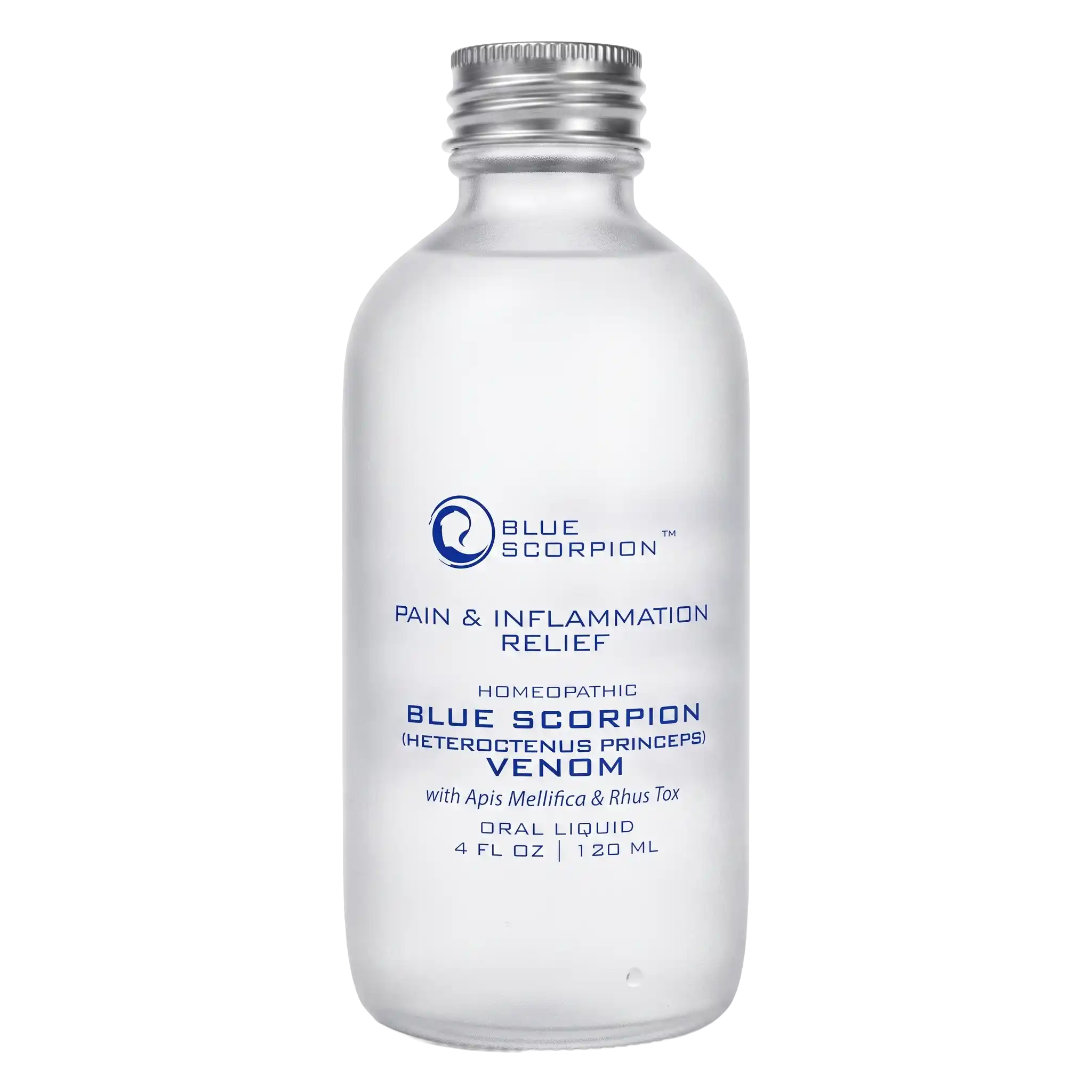
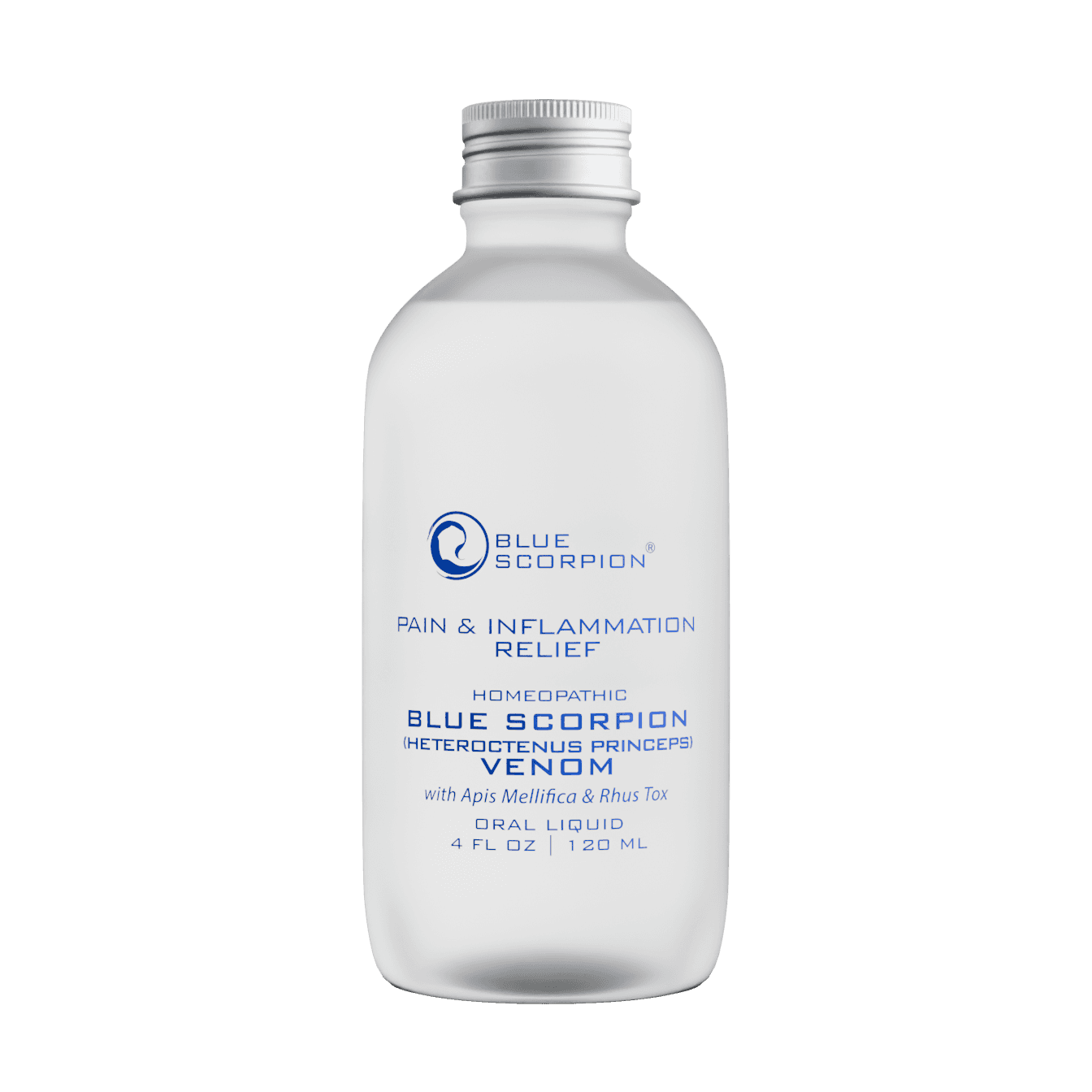
Blue Scorpion Pain and Inflammation Relief is an FDA NDC-listed homeopathic formula that is non-opioid, alcohol-free, and built around a rare active ingredient called Heteroctenus Princeps venom. It is one of a growing number of options adults are exploring as they compare ingredients and formulations more carefully before buying.
Keep reading to learn what the best homeopathic medicine for inflammation looks like, how to read a label with confidence, and how to match a formula to your specific symptom pattern.
What Inflammation Can Feel Like Day to Day
Inflammation is not just a clinical term. It is the grinding feeling in your knees on the stairs, the stiffness that takes 20 minutes to ease up in the morning, and the ache that follows a long day on your feet.
Joint Stiffness, Swelling, and Body Aches
Joint stiffness, heat, and visible swelling are the classic signs of inflammation that most people recognize. Less obvious is how much these symptoms vary by time of day, movement, and location in the body. Morning stiffness that improves after you start moving points to a different pattern than pain that worsens with continued motion.
Swelling tends to accompany fluid accumulation near inflamed tissue. Redness and localized heat are also common, especially in joints close to the skin's surface, such as the knuckles, wrists, and knees. Body aches that spread more broadly, without a single obvious point of origin, suggest a systemic inflammatory pattern rather than a localized injury.
These distinctions matter more than most people realize when choosing a homeopathic formula. The right ingredient for stiff joints that loosen with movement is different from the right ingredient for pain that worsens the moment you try to move at all.
When Occasional Flare-Ups Start Affecting Routine
A single sore morning after heavy lifting is one thing. Recurring stiffness that disrupts sleep, limits your range of motion, or makes simple tasks uncomfortable is a different challenge entirely. Inflammation that becomes a pattern often shifts how people approach their daily schedule.
You may find yourself avoiding certain movements, skipping workouts, or waking in the night from joint discomfort. That pattern is what pushes many adults to look beyond single-ingredient topicals and start researching formulas that address inflammation more broadly. The ingredients in those formulas are worth examining closely before you commit to a daily regimen.
How Homeopathic Medicines Are Evaluated
Reading a homeopathic label takes more than glancing at the brand name. The ingredients, dilutions, and regulatory markings on the label tell you most of what you need to know about whether the formula is legitimate.
Why Ingredient Names Matter More Than Marketing Claims
A vague label that lists only proprietary blends or uses non-specific terms like "natural anti-inflammatory complex" gives you nothing to evaluate. Legitimate homeopathic products list active ingredients using their Latin names, the original source material, and the dilution potency.
When you see Apis Mellifica 6X, Rhus Toxicodendron 6X, or Heteroctenus Princeps Venom 3X on a label, you are looking at ingredients with traceable origins and a defined standard of preparation.
These names allow you to cross-reference the ingredient against the Homeopathic Pharmacopeia of the United States (HPUS), which sets the standards homeopathic drugs are held to. Marketing language on the front of a box cannot substitute for this level of transparency on the ingredient panel.
What Dilution Labels Like 3X and 6X Mean
In homeopathic notation, the number and letter together indicate how many times an ingredient has been diluted and the dilution factor used. The X scale uses a 1:10 ratio per step. A 3X dilution means the original substance has been diluted three times at a 1:10 ratio. A 6X dilution means six rounds of that process.
Lower numbers like 3X retain a slightly higher concentration of the original substance. Higher potencies are often used for more chronic or systemic patterns. Neither is inherently better; the match between the dilution and the symptom pattern is what matters in homeopathic practice.
What to Look for in OTC Homeopathic Labeling
Buying a homeopathic OTC product without a practitioner means the label becomes your primary guide. Here is what to verify before purchasing:
Active ingredients listed by Latin name with dilution noted (e.g., 3X, 6X)
Indication language that matches your symptom (e.g., "temporary relief of pain and inflammation")
FDA National Drug Code (NDC) printed on the label or box
Manufactured in a cGMP facility or FDA-registered facility
HPUS compliance statement somewhere in the labeling
An FDA NDC number means the product has been listed as a drug with the FDA, which requires the manufacturer to meet specific registration and labeling requirements. That is a different standard from that for a dietary supplement, and it is a meaningful distinction when comparing products.
Key Homeopathic Ingredients Commonly Used for Relief
The ingredients in a homeopathic inflammation formula determine which symptoms it is most suited to address. Understanding what each one traditionally targets helps you evaluate whether a product fits your pattern.
Apis Mellifica for Swelling and Heat
Apis Mellifica is derived from the honeybee and is one of the most recognized homeopathic ingredients for swelling and heat-related discomfort. It is traditionally indicated when inflammation presents with puffiness, redness, and a stinging quality to the pain. Joints that feel warm to the touch and swollen, especially when pressure makes the discomfort worse, are a classic match for this ingredient.
It appears at a 6X dilution in several multi-ingredient formulas, including those designed to support systemic inflammation.* At that potency, it is prepared for OTC use and listed under HPUS standards. At that potency, it is prepared for OTC use and listed under HPUS standards.
Rhus Toxicodendron for Stiffness and Motion-Related Discomfort
Rhus Toxicodendron, derived from poison ivy, is one of the most frequently cited homeopathic ingredients for joint and muscle stiffness. Its traditional hallmark is discomfort that feels worst at rest or during the first movement after stillness, then gradually improves with continued motion.
This pattern often appears in arthritis-related joint stiffness, post-exercise soreness that lingers into the next morning, and general muscular tension. If you notice that getting up from a chair is harder than staying in motion, Rhus Toxicodendron is the ingredient most commonly matched to that experience.
It is also traditionally used for skin irritation and general muscle discomfort, making it a versatile ingredient in multi-symptom formulas.
Arnica Montana for Soreness and Bruised Sensations
Arnica Montana is derived from a mountain plant and is one of the best-known homeopathic ingredients for soreness and that deep, bruised-feeling ache after physical exertion. It is commonly used for soft tissue discomfort following overuse, impact, or sustained physical effort.
Athletes and active adults often recognize this ingredient because it appears in both topical gels and internal formulas designed to support post-activity recovery. The bruised, sore, tender-to-the-touch quality of discomfort is the traditional indicator for its use.
Bryonia for Pain That Feels Worse With Movement
Bryonia occupies the opposite end of the motion spectrum from Rhus Toxicodendron. Where Rhus Toxicodendron suits stiffness that eases with movement, Bryonia is traditionally indicated when any motion at all makes the pain significantly worse. Lying still and avoiding pressure on the affected area tends to provide relief when Bryonia is the right match.
This pattern can appear in inflamed joints during an acute flare, in muscle pain that feels sharp with any change in position, or in chest and rib discomfort during inflammation. Knowing this distinction matters when comparing formulas, because a product suited to one pattern may not address the other as effectively.
Systemic Formulas vs Topical Options
Choosing between an internal liquid formula and a topical cream is not a matter of one being superior. It comes down to the pattern of symptoms and how broadly your inflammation is distributed.
When a Multi-Ingredient Liquid Formula May Make Sense
Internal homeopathic liquids work systemically, meaning they are absorbed sublingually and processed through the body rather than applied to a single area. This makes them a practical choice when inflammation is not confined to one spot. If your knees, wrists, and lower back flare at different times, a topical product requires you to apply it to multiple areas each time.
Multi-ingredient formulas that combine Apis Mellifica, Rhus Toxicodendron, and additional actives are designed to address overlapping symptom profiles in a single daily dose. The sublingual route, typically holding the liquid under the tongue for 15 to 20 seconds before swallowing, is designed to allow faster absorption than oral tablets.
Where Creams, Gels, and Spot Relief Fit In
Topical homeopathic options remain a strong choice for localized, surface-level discomfort. A sore knee after a run, a tender elbow, or a specific joint that flares from repetitive motion can respond well to a targeted cream or gel applied directly to the area.
The limitation is coverage. Topicals do not address multiple sites simultaneously, and they may not reach deeper tissue the way a systemic formula can. Many adults use both: a daily internal formula for broader inflammation support and a topical as needed for acute, localized flare-ups. Understanding your own inflammatory pattern, whether focal or systemic, is the starting point for deciding which delivery method best fits your routine.
How to Compare Quality, Safety, and Credibility
Not all homeopathic products are held to the same standard, and the differences between them are visible on the label if you know what to look for.
FDA NDC Listing, Manufacturing Standards, and Transparency
An FDA National Drug Code signals that a product has been registered with the FDA as a drug product and meets specific labeling and manufacturing requirements. This is a regulatory threshold that distinguishes listed homeopathic OTC drugs from supplements that lack such a designation.
Look for products manufactured in FDA-registered, cGMP-compliant facilities. The cGMP standard means the facility follows Current Good Manufacturing Practice regulations, which cover ingredient sourcing, testing, production controls, and product consistency. These details are not always advertised prominently, but they should be findable in the product description or on the brand's website.
Why Non-Opioid and Alcohol-Free Formulas Appeal to Many Adults
Many adults managing ongoing inflammation are specifically looking for daily-use options that do not carry dependency risk or interact with other medications. Opioid-based pain management carries well-documented concerns, and alcohol-containing tinctures are not suitable for everyone, including those in recovery, those with specific dietary restrictions, or those who simply prefer to avoid it.
Non-opioid, alcohol-free homeopathic formulas fill that gap. They are taken daily without the side effect profile associated with pharmaceutical pain management, and homeopathic products are not known to interact with medications or supplements when used as directed.
Questions to Ask Before Trying a New Formula
Before adding a new homeopathic formula to your routine, run through this checklist:
Does the label list active ingredients with Latin names and dilution levels?
Is there an FDA NDC number on the packaging?
Is the formula manufactured in an FDA-registered, cGMP facility?
Does the indicated use match your specific symptom pattern?
Is the product non-opioid and free from ingredients you want to avoid?
Is the brand transparent about sourcing, clinical research, and testing standards?
Answering yes to most of these questions puts you in a strong position to evaluate whether a product is worth trying.
A Practical Way to Choose What Fits Your Needs
The ingredient list on a homeopathic formula is not just labeling. It is a map of what the formula was designed to address and whether it matches your body's current pattern.
Matching Ingredient Profiles to Your Symptom Pattern
Start with your most consistent symptom, not the most dramatic one. If morning stiffness that loosens up after you get moving is your primary complaint, Rhus Toxicodendron is the ingredient most aligned with that experience. If swelling and heat are more prominent, Apis Mellifica is the traditional first consideration.
Multi-symptom formulas are designed for people whose inflammation does not fit neatly into one category. Joint stiffness, nerve irritation, and muscle tension often occur together, and a formula with two or three complementary actives may be more practical than rotating single-ingredient remedies.
If daily inflammation is slowing you down, one bottle covers more than you might expect. Try It Now and see what systemic support feels like.
Frequently Asked Questions
Your Knee Feels Stiff and Swollen After Activity: Which Homeopathic Options Are Commonly Used?
Rhus Toxicodendron is traditionally used for stiffness that is worst after rest and improves with continued movement, while Apis Mellifica is more closely associated with swelling, heat, and a stinging quality of discomfort. If both symptoms are present, a formula that includes both ingredients may be the more practical starting point.
Your Hands Ache and Feel Hot From Arthritis: Which Homeopathic Remedies Are Typically Considered for Joint Inflammation?
Apis Mellifica is a common first consideration when joints feel hot, puffy, and sensitive to pressure. Rhus Toxicodendron is often included in arthritis-focused formulas because of its traditional use for joint stiffness that limits morning mobility. A practitioner can help you determine which profile fits more closely.
Your Muscles Feel Sore and Inflamed After Exercise: Which Homeopathic Choices Are Most Often Suggested for Muscle Overuse?
Arnica Montana is the most widely recognized homeopathic ingredient for post-exertion soreness and aching with a bruised sensation in muscles. Rhus Toxicodendron is also frequently paired with it in formulas designed for overuse and stiffness patterns. Both appear across a range of OTC options in topical and internal forms.
Your Stomach Feels Irritated and Inflamed: Which Homeopathic Remedies Are Commonly Used for Gastric Inflammation Symptoms?
Arsenic Album is among the most referenced homeopathic ingredients for stomach inflammation, particularly when burning discomfort is the dominant symptom. Nux Vomica is also commonly associated with digestive irritation and inflammation patterns. Neither Apis Mellifica nor Rhus Toxicodendron is primarily indicated for gastric inflammation, so formula selection matters here.
Your Inflammation Keeps Coming Back for Months: How Do People Choose a Homeopathic Remedy for Chronic Inflammation Patterns?
Chronic inflammation patterns often benefit from a systemic formula rather than a targeted topical, since the inflammation is not confined to a single site. Many adults with recurring inflammation choose multi-ingredient liquids that address overlapping symptom types in a single daily dose. Consulting a homeopathic practitioner for chronic patterns is generally recommended to match the formula to your full symptom picture.
You Want a Non-Opioid, Alcohol-Free Option With an FDA NDC-Listed Label: What Should You Verify Before Trying a Homeopathic Inflammation Product?
Confirm that the product bears an FDA National Drug Code on the label, not just on the supplement facts panel. Verify the formula is manufactured in a cGMP-compliant, FDA-registered facility and that the ingredient panel lists active ingredients by Latin name with dilution potency noted. Non-opioid and alcohol-free attributes should be stated explicitly in the product description, not implied.
Find Lasting Relief from Inflammation
Blue Scorpion Pain and Inflammation Relief: Finding the right formula is the first step toward reclaiming your daily routine from stiffness and discomfort. Order now to experience systemic homeopathic support designed for your active lifestyle.
*These statements are based on traditional homeopathic practice and claims are based on traditional homeopathic practice, not accepted medical evidence. Not FDA evaluated.