


Joint stiffness that greets you before you get out of bed. Nerve discomfort that flares after a long day. Muscle soreness that lingers past the point where rest should have fixed it. If any of that sounds familiar, you are not alone. Millions of adults across the United States are managing recurring pain and inflammation while actively searching for opioid alternatives for pain management.
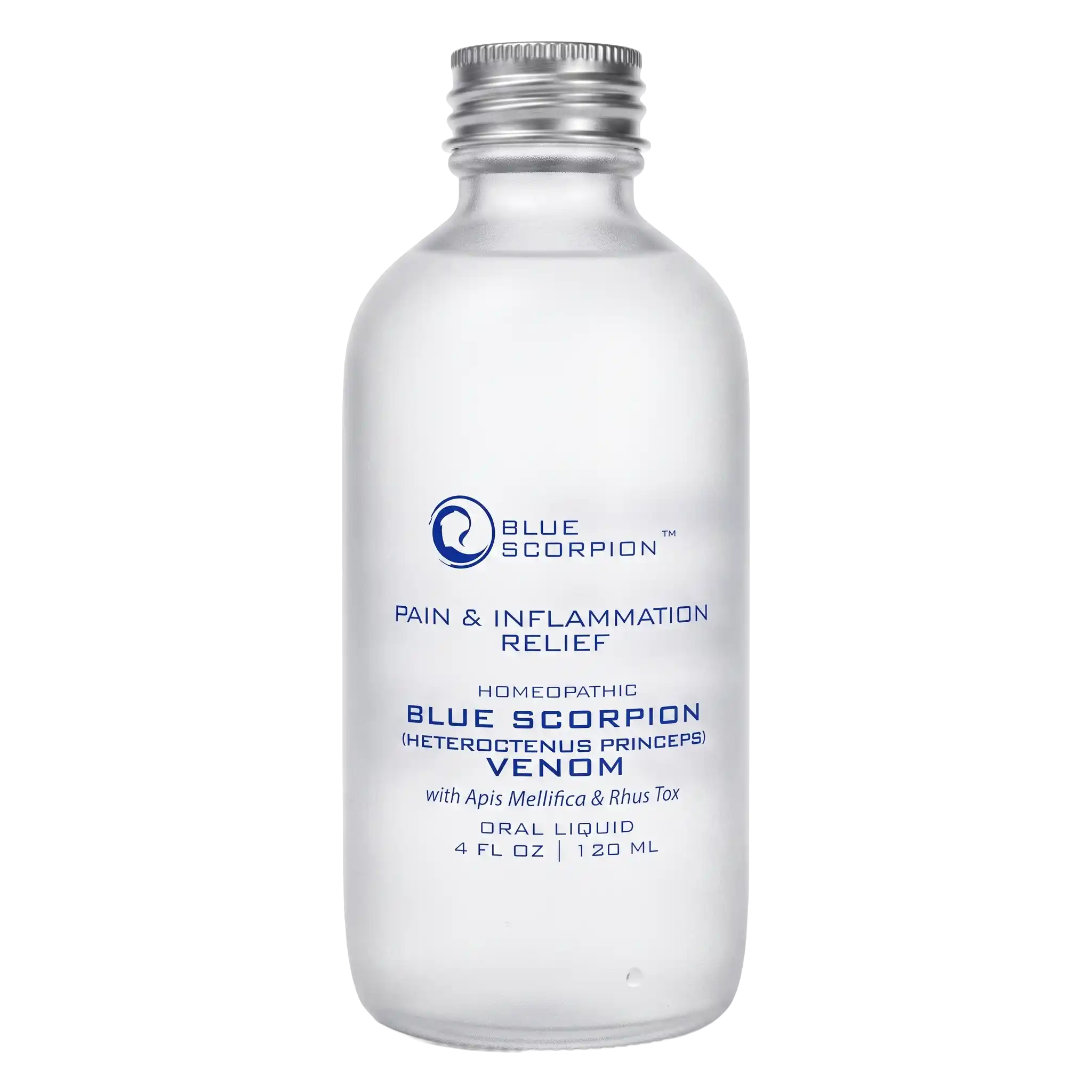
Blue Scorpion Pain and Inflammation Relief is an FDA NDC-listed, non-opioid, alcohol-free homeopathic formula built around Heteroctenus Princeps venom, a rare peptide-rich ingredient sourced from the Caribbean and processed through a patented polarization method. It sits within a broader landscape of natural and homeopathic approaches worth knowing about before you make any decision.
Keep reading to learn how different opioid alternatives for pain management compare, what realistic expectations look like, and where homeopathic remedies fit within a wider plan. The article covers movement, lifestyle, topical versus systemic options, and ingredient transparency so you can evaluate your choices clearly.
Why Many People Are Rethinking Conventional Pain Paths
Pain that shows up every day has a way of forcing a conversation about what you are actually putting into your body. For many adults, that conversation starts when they begin noticing the trade-offs that come with long-term reliance on opioid-based medication.
The Daily Reality of Joint Stiffness, Muscle Soreness, Nerve Discomfort, and Body Aches
Joint stiffness after sitting for an hour, muscle soreness that peaks two days after training, nerve discomfort that wakes you at 2 a.m.; these are not abstract conditions. They are daily physical realities that interrupt work, sleep, and activity.
The CDC's clinical practice guidance notes that nonopioid therapies are at least as effective as opioids for many common types of acute pain, including musculoskeletal injuries, low back pain, and minor post-surgical discomfort.
Chronic pain carries a different weight. When symptoms have been present for months or years, the body's pain response can become heightened. This is partly why dependence on any single medication, opioid or otherwise, tends to lose effectiveness. The conversation about alternatives is not just about avoiding risk. It is about finding approaches that can realistically be sustained day after day.*
Where Concerns About Dependence, Tolerance, and Side Effects Enter the Decision
Opioid use over time is associated with tolerance, meaning you often need higher doses to achieve the same relief. That cycle carries real consequences, including physical dependence, withdrawal sensitivity, and a narrowing of functional daily life. These are not rare outcomes; they are well-documented patterns that pushed clinical guidelines to expand nonopioid options significantly.
Non-opioid approaches do not carry those same dependency risks. That said, they are not risk-free either. Some nonopioid medications affect the stomach, kidneys, or liver with prolonged use. The distinction matters because it shapes which options suit which situations best, and that is the core of what the rest of this guide covers.
What Natural Pain Support Can Realistically Do
Natural pain support works best when you understand what it is actually designed to do. It is not a replacement for medical care for serious conditions, but it can play a meaningful role in managing everyday discomfort.
Short-Term Comfort Versus Long-Term Habit Building
A single dose of a natural remedy or a single session of gentle movement may reduce short-term discomfort. The more meaningful benefit tends to come from consistency. When natural approaches are built into a daily routine, they can support your body's ability to manage recurring inflammation and soreness more predictably over time.
Think of the difference between icing a sore joint once and maintaining a weekly mobility routine. The ice addresses today's flare. The mobility work changes how your joint handles stress going forward. Natural pain support strategies work similarly: the short-term effect matters, but the habit is where the real value accumulates.
How to Set Safe, Practical Expectations for Non-Opioid Options
Non-opioid approaches are not built for acute, emergency-level pain. They are generally most relevant for the everyday discomfort that sits at a manageable level but refuses to fully go away. If you are managing joint aches, post-activity soreness, or recurring nerve discomfort, a layered approach combining movement, dietary choices, and a consistently used homeopathic formula may produce a meaningfully different baseline over weeks.
Setting expectations also means accepting that natural options rarely work overnight. Most people who report consistent benefit from homeopathic or behavioral approaches describe noticing a shift after two to four weeks of regular use. Patience is not a weakness here; it is part of how these approaches function.
Movement, Recovery, and Lifestyle Strategies That Support Relief
The most accessible opioid alternatives for pain management do not come in a bottle at all. They come from how you move, rest, and fuel your body every day.
Gentle Mobility, Walking, and Strength Work for Everyday Function
Regular movement is one of the most consistently supported non-opioid strategies for managing chronic pain. Light aerobic activity, walking, aquatic exercise, and resistance training have each shown benefit for pain and function without the risks associated with medications.
The mechanism is partly circulatory, partly neurological. Movement increases blood flow to sore tissue, supports joint lubrication, and signals the nervous system in ways that can reduce pain sensitivity over time.
The key is starting with what you can actually sustain. A ten-minute walk twice a day is more useful than one intense session that leaves you sore for a week. Gradual loading, not aggressive effort, is what most reliably reduces inflammation-related stiffness.
Sleep, Stress Load, and Pacing as Overlooked Pain Multipliers
Sleep disruption and elevated stress both increase the body's inflammatory response. If you are sleeping poorly and managing high stress alongside chronic pain, those factors are likely amplifying your symptoms rather than sitting separately from them.
This is not a minor point. Research on chronic pain consistently identifies sleep deprivation and psychological stress as independent contributors to pain intensity.
Pacing your activity across the day also matters more than most people expect. Overdoing physical activity on a good day often triggers a multi-day flare. Building a realistic activity rhythm that does not swing between maximum effort and complete rest tends to produce steadier pain levels.
Food and Hydration Patterns That May Influence Inflammation
No single food resolves chronic pain, but dietary patterns do appear to influence the body's baseline inflammatory state. Diets high in processed sugar and refined grains are associated with higher inflammatory markers. Consistent hydration supports joint tissue and helps the body clear metabolic waste from muscle activity.
Foods commonly associated with lower inflammation include omega-3-rich fish, leafy greens, berries, and nuts. Reducing alcohol intake is also worth noting. Many people pursuing natural pain options are specifically looking for alcohol-free products and approaches, which aligns with removing one more variable that may heighten inflammatory sensitivity.
Topical and Systemic Approaches: How They Differ
Choosing between a topical and a systemic approach is a practical decision that depends on where your pain shows up and how widespread it is.
When a Localized Option Makes Sense
Topical formulas deliver their active ingredients directly to the skin's surface near the affected area. This limits how much reaches the bloodstream, which is often an advantage for people concerned about systemic side effects. Topical options work well for isolated discomfort, such as a single sore joint, a specific muscle knot, or a small area of nerve sensitivity.
The limitation is clear: topical application does not reach discomfort originating deeper in the body, or that appears in multiple locations at once. If your pain migrates, shifts, or affects your whole body after training or a flare-up, a topical alone may leave large areas unaddressed.
When Broader Whole-Body Support May Be More Useful
Systemic formulas, including oral homeopathic preparations, are absorbed and distributed more broadly. They are better suited to multi-site discomfort, nerve pain with wide distribution, or inflammation affecting joints, muscles, and soft tissues simultaneously. A comparison of when each approach fits best:
Single-joint soreness: a topical option is a good fit; a systemic option works too, but it covers more ground than you actually need.
Post-training full-body ache: topical products offer limited coverage; a systemic option is the better fit for soreness that spreads across multiple areas.
Nerve pain across a limb: topical application only provides partial relief; a systemic option is the better fit for nerve discomfort that runs the length of a limb.
Localized skin irritation: a topical option is a good fit; a systemic option isn't typically needed for irritation confined to one area.
Recurring daily inflammation: a topical option can play a supplemental role, but a systemic option is generally the preferred approach for inflammation that recurs day after day.
Where Homeopathic Remedies Fit Into a Broader Plan
Homeopathic formulas have a specific place in the non-opioid landscape: daily, low-risk, systemic support for temporary pain and inflammation relief.* They are not intended to replace medical care, but they are a credible category when you know what to look for.
How Homeopathic Formulas Are Commonly Used for Temporary Relief
Homeopathic remedies are used for temporary relief of minor symptoms, including joint discomfort, muscle aches, nerve irritation, and swelling. They are formulated from highly diluted biological and botanical sources and prepared according to standards set by the Homeopathic Pharmacopeia of the United States. Most are taken sublingually, meaning held under the tongue before swallowing, to support absorption.
Consistency matters more than dose intensity with homeopathic options. Most users take a formula twice daily and notice gradual changes rather than immediate effects. This is a feature of homeopathic formulation, not a flaw in the approach.
What to Look for in Ingredient Transparency, Labeling, and FDA NDC Status
Before trying any homeopathic product, check for the following:
A clearly listed FDA National Drug Code (NDC) on the label
Named active ingredients with their homeopathic dilution levels (e.g., 3X, 6X)
A cGMP-compliant manufacturing facility
Third-party testing for purity and banned substance screening (relevant for athletes)
No undisclosed alcohol in the inactive ingredients
An FDA NDC listing means the product is registered in the federal drug database, which provides a baseline level of regulatory accountability that generic or unlisted supplements do not carry.
Choosing a Next Step That Matches Your Pain Pattern
Deciding to explore non-opioid approaches is the easy part. Choosing the right starting point is where it helps to slow down and think clearly.
Questions to Ask Before Trying a New Relief Option
Before adding any new approach, ask yourself:
Is your pain localized or does it affect multiple areas?
How long have symptoms been present: days, weeks, or years?
Are you taking any prescription medications that require medical clearance before adding supplements?
Do you have athletic or competition requirements that demand banned-substance verification?
Are you primarily managing inflammation, nerve discomfort, or joint stiffness?
These questions help narrow the field quickly. A competitive athlete needs third-party sport certification. Someone managing daily nerve pain needs a systemic approach. Someone with a single sore joint after a weekend hike may do well with a topical.
When to Talk With a Healthcare Professional
Any pain that is new, severe, worsening, or accompanied by other symptoms should be evaluated by a healthcare provider before you begin any self-directed treatment. This is especially true for nerve pain that appeared without a clear cause, joint swelling with redness and heat, or pain following an injury that may need imaging.
Homeopathic products are not known to interact with medications when used as directed, but if you are on prescription medications or managing a complex condition, it is always worth confirming with your provider before adding anything new to your routine.
A Low-Pressure Way to Explore Credible Homeopathic Support
If you have ruled out serious underlying causes and are looking for a consistent, daily non-opioid option, a short trial of a credentialed homeopathic formula is a low-risk starting point. Look for FDA NDC listing, transparent active ingredients, and manufacturing standards before committing.
Frequently Asked Questions
Your Back Still Aches Every Day — What Non-Opioid Options Actually Reduce Chronic Pain Without Sedation?
Physical therapy, consistent low-impact movement, and oral or topical non-opioid formulas are among the most supported options for daily back pain management. The CDC's updated guidelines recommend maximizing nonopioid and nonpharmacologic strategies before considering opioids for chronic conditions. A systemic homeopathic formula taken daily may support ongoing relief for some users.
The Incision Pain Is Sharp at Night — What Non-Opioid Medications Work Best After Surgery and How Soon Do They Help?
Post-surgical pain management should always be directed by your healthcare provider. Nonopioid options such as acetaminophen and NSAIDs are frequently used for mild post-surgical discomfort with quicker onset than homeopathic options. Homeopathic formulas are generally better suited to ongoing, daily discomfort rather than to acute postoperative pain.
Inflammation Is Driving the Pain — When Are NSAIDs, Acetaminophen, or Topical Agents the Safest First-Line Choices?
NSAIDs and acetaminophen remain common first-line choices for inflammation-driven pain, though both carry risks with extended use, particularly for people with kidney, liver, or cardiovascular concerns. Topical agents reduce systemic exposure when pain is localized. Homeopathic systemic options like those combining Apis Mellifica and Rhus Toxicodendron are typically added as daily maintenance support alongside these approaches.
Nerve Pain Burns or Tingles — What Evidence-Backed Non-Opioid Treatments Help Neuropathic Pain, and What Side Effects Matter Most?
Neuropathic pain is often addressed with anticonvulsants or SNRI antidepressants under medical supervision, both of which carry side effect profiles including dizziness, weight changes, and sedation.
Natural alternatives, including homeopathic formulas with Heteroctenus princeps and Apis Mellifica, are used by some individuals for temporary relief of nerve discomfort without those side effects. Always consult a provider before making changes to a neuropathic pain regimen.
Pain Flares Despite Treatment — How Do Physical Therapy, Injections, and Behavioral Approaches Compare for Function and Relief?
Physical therapy supports function and reduces pain through structured movement, and it carries minimal risk when supervised appropriately. Injections provide targeted, temporary relief for specific joint or nerve sites but are not intended for daily use.
Behavioral approaches like cognitive behavioral therapy address the psychological dimension of chronic pain and are increasingly recommended alongside physical strategies. Each serves a different purpose, and combining them tends to produce better outcomes than relying on one alone.
You Want Something Non-Opioid and Alcohol-Free — How Do You Verify an FDA NDC Listing and Ingredient Transparency Before You Try It?
Search the product's NDC number in the FDA's National Drug Code Directory to confirm it is genuinely registered. Look for clearly printed active ingredients with homeopathic potency designations (such as 3X or 6X) and a list of inactive ingredients that does not include alcohol. Manufacturing in an FDA-registered, cGMP-compliant facility is another indicator of a product that meets baseline regulatory standards.
A Practical Place to Land When You Are Done Researching
The landscape of opioid alternatives for pain management is wide, and no single approach fits every person or every pain pattern. Movement, rest, dietary choices, topical relief, and homeopathic formulas each serve a distinct purpose. The most effective plans tend to combine several of these rather than replacing one pharmaceutical with one natural option and expecting the same outcome.
If you are specifically looking for a non-opioid, alcohol-free option that is FDA NDC-listed, transparently formulated, and tested for sport, Blue Scorpion's homeopathic pain and inflammation relief formula is worth a closer look. It is not a shortcut, but it is a credentialed, daily-use tool within a broader plan.
These statements are based on traditional homeopathic practice and have not been evaluated by the Food and Drug Administration. This product is not intended to diagnose, treat, cure, or prevent any disease.

